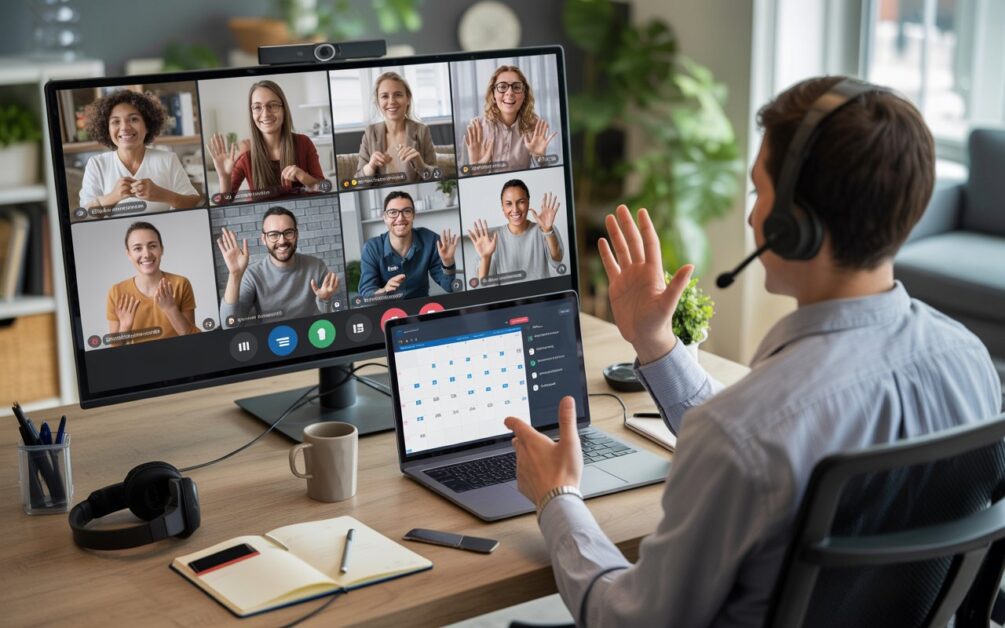
Hosting memorable virtual community events is now a strategic requirement for brands that want to build relationships with people around the world and this guide shows you how to plan, run, and measure online gatherings that deliver real value.
As we move into 2026, every virtual event should be treated as a thoughtful touchpoint: a chance to welcome members, surface ideas, and strengthen loyalty. By understanding your audience’s needs and choosing the right platforms, you can turn a routine meeting into a high-value experience where people feel seen, heard, and connected.

Key Takeaways
- Focus on direct engagement to strengthen member connections and community value.
- Plan each gathering as a critical touchpoint for interaction and learning.
- Design events around the people you serve clarify outcomes and expectations up front.
- Move beyond webinars: use formats that create belonging and tangible benefits.
- Select platforms and tools that match your event goals and accessibility needs.
Overview: Embracing the New Era of Virtual Community Events
By 2026, virtual events have evolved from occasional add-ons into core strategies for communities and brands that want to grow and retain members across the world. The move from face-to-face meetups to digital platforms unlocked new ways to deliver learning, connection, and measurable value to people wherever they are.
According to the 2024 Community Benchmark Report, roughly 40% of community professionals now cite hosting events as a primary driver of member acquisition. Leaders in the space are responding: about 59% report running multiple types of virtual events to keep their communities active and engaged. When done well, these approaches can lift participation top-tier communities report participation rates near 50% versus an industry average around 33% (cite source).
Expect three primary outcomes from thoughtfully designed online gatherings: newcomer acquisition, ongoing member retention, and focused learning or skill-building. Plan with those goals in mind and choose session lengths, formats, and platforms that align with the outcome you want to prioritize.
Data visualization suggestion: include a small bar chart comparing participation rates (top-tier 50%, industry avg 33%) and event adoption (40% reporting events as an acquisition channel). Add alt text: “Chart showing community event participation and adoption rates.”
Setting Clear Objectives and Participant Expectations
Every successful online event starts with a clear objective. Before you promote a session, decide whether the primary goal is education, connection, or action then design the agenda, timing, and participant experience around that single priority so members arrive knowing what to expect.
Community leaders, like Mathilde at Circle, stress the importance of categorizing events so the right audience shows up for the right format. Clear labels (e.g., “Workshop Hands-on,” “Speaker Session :- Q&A,” “Networking Small Groups”) prevent confusion and reduce drop-off caused by mismatched expectations.
Set expectations early by adding short guidance to your signup form and confirmation emails: what attendees should prepare, how long the session will run, whether cameras are encouraged, and what participation looks like. Include an optional field on registration for accessibility needs or accommodation requests (closed captions, live transcription, interpreters) so people feel safe asking for support.
How to set goals (quick checklist): make them SMART — Specific (what will change), Measurable (attendance or skill gain), Achievable, Relevant to your community, and Time-bound (session length and follow-up deadline). Use this to craft the one-sentence event description that appears on your signup page.
| ObjectiveExpectationOutcome | ||
| Education | Clear learning goals | Informed attendees |
| Connection | Engaging discussions | Stronger relationships |
| Action | Defined next steps | Motivated participants |
Example signup fields to copy: “What do you hope to learn?” (short answer), “Do you need captioning or other accommodations?” (optional). Testing accessibility: verify captions work in your chosen platform and run a rehearsal with a volunteer who requests an accommodation.
See this short demo for setting expectations and accommodations:
Virtual Community Events: Best Practices for Building Engagement
Engagement is the difference between a meeting and a moment your community remembers. For virtual community events to succeed in 2026, prioritize interactive design, clear facilitation, and a welcoming environment that encourages people to participate.
Use interactive elements deliberately: short live polls to surface opinions, structured Q&A segments to answer the most pressing questions, and moderated chat prompts that invite quick reactions. For example, a virtual “block party” or feature showcase can introduce new members to community tools and rituals while demonstrating practical value.
Create a comfortable space so attendees can focus: recommend muting notifications, encourage camera use only when people opt in, and give housekeeping instructions up front so members know how to engage. Balance energy with structure keep sessions tightly timed and plan specific moments for conversation so attention stays high.
Start on time and lead with a strong opening to set expectations and momentum. Promptly beginning communicates professionalism and respect for attendees’ time, and it increases the chance that people will stay engaged throughout the session. After the event, capture feedback to improve future sessions and show participants their voices matter.
| Best PracticeDescriptionBenefit | ||
| Interactive Elements | Use live polls, timed Q&A, and breakout prompts | Enhances audience engagement |
| Comfortable Space | Provide housekeeping, opt-in camera rules, and accommodation guidance | Increases focus and presence |
| Prompt Start | Open with a hook, agenda, and first interaction | Sets a professional tone |
Practical recipes you can copy
- First 10–15 minutes timeline: 1) 0:00–2:00 Welcome + hook (one-line benefit), 2) 2:00–4:00 Housekeeping (how to ask questions, captioning), 3) 4:00–8:00 Short presentation or demo, 4) 8:00–15:00 Interactive poll + first Q&A.
- Sample poll questions: “What’s your top goal for today’s session?”; “Which feature would you like more tutorials on?”
- Q&A timing: allow 60–90 seconds per question, triage with a moderator to surface community-wide themes.
- Chat moderation rules (do/don’t): do acknowledge short answers in chat; don’t let side conversations derail the main thread use separate channels for social chat.
Micro-CTAs: include a 5-question poll template and a downloadable 10-minute opening script in your event prep pack to standardize high-quality starts.
Choosing the Right Platform and Tools for Success
Picking the right platforms and tools is one of the fastest ways to improve attendee experience and reduce friction for your team. Match the platform to the tone and goals of the session: casual meetups need playful spaces, conference-style events need scalable and immersive environments, and webinars benefit from a stage-like setup with strong broadcast controls.
Platform selection primer:
- Casual / social meetups: platforms such as Mixily create a relaxed, game-like space that encourages serendipitous connection and shorter sessions.
- Conference or large hybrid events: Topia.io and Gather.Town provide spatial, immersive experiences that scale better for many simultaneous conversations and exhibitor areas.
- Webinars and high-production talks: Looped Live (and traditional webinar platforms like Zoom Webinar) give you the presenter-first controls and production features suited to TED-style talks or big keynotes.
Evaluate features that matter for your use case: maximum attendees, breakout room capabilities, captioning/transcription, chat moderation, recording and clip export, analytics, and integrations with your CRM or community software. Accessibility is non-negotiable confirm whether closed captioning is built in or requires a third-party service, and test captions in rehearsals.
Decision checklist (quick):
- Goal: What outcome do you want? (connection, learning, acquisition)
- Scale: How many attendees and concurrent sessions?
- Interactivity: Do you need breakout rooms, spatial audio, or polls?
- Accessibility: Are live captions, transcripts, and interpreters supported?
- Integrations & team workflow: Does it connect to your registration, CRM, and content tools so your team can operate efficiently?
- Budget & office constraints: Factor in pricing tiers and any admin overhead for your event team.
Mini case study suggestion: include a screenshot of a pilot run showing a host managing breakout rooms, live captions, and a live poll to demonstrate how features align with goals (keep images labelled and accessible).
Before the live date, run a 15–30 minute pilot with a subset of your team and volunteers to validate audio/video quality, captioning, and integrations. Provide your operations team with a one-page run sheet that lists roles (host, moderator, tech lead), login credentials, and escalation steps so everyone knows who owns what during the session.

| PlatformBest ForKey Feature | ||
| Mixily | Casual gatherings | Playful environment |
| Topia.io | Conference-style events | Immersive experience |
| Looped Live | Webinars | High-energy atmosphere |
Innovative Event Formats to Inspire Connection and Learning
Fresh event ideas help your community event stand out and create real opportunities for connection and skill-building. Moving beyond one-size-fits-all sessions lets you design formats that match member needs—whether that’s hands-on learning, peer recognition, or low-pressure social time.
Large-scale examples show what’s possible: Miro’s Distributed event used digital reception areas and immersive keynote stages to deliver an experience for tens of thousands of registrants, and the UN Global Compact Leaders Summit ran long-form dialogue across many time zones to connect participants from around the world. Use those examples as inspiration, then scale the format to fit your group size and goals.
Workshops, Panel Discussions, and Member Showcases
Workshops are ideal for skills and hands-on learning: plan a 60–90 minute session with a 10-minute intro, 35–50 minutes of guided activity, and a 15–20 minute debrief. Assign roles (host, facilitator, tech lead) and a pre/post quiz to measure learning outcomes. Panel discussions work well for knowledge sharing—pick 3–4 speakers, a moderator to surface themes, and 10–15 minutes of audience Q&A.
Member showcases or “show and tell” sessions are low-effort, high-engagement formats: invite 3–5 members to present for 5 minutes each, provide presentation prompts (what problem did you solve, what tools did you use), and close with 10 minutes of group feedback. These sessions are powerful for recognition and community momentum.
Integrating Trivia, Games, and Networking Opportunities
Games and trivia create structure for casual socializing. Use tools like Codenames, Skribbl.io, or quick Kahoot quizzes to break the ice. For networking, design breakout sessions with a clear prompt and a recommended group size of 4–6 people; 15 minutes is often enough to surface useful connections without burning attention.
| FormatPurposeBenefits | ||
| Workshops | Skill-building | Hands-on learning; measurable results |
| Panel Discussions | Knowledge sharing | Diverse perspectives; thought leadership |
| Trivia Games | Social interaction | Fun engagement; lowers barriers to talk |
Practical templates to include in your planning pack: a 60-minute workshop run sheet, a show-and-tell script with prompts, and a breakout facilitator guide (timing, prompts, reporting back). Track outcomes by collecting one quick post-session metric (e.g., “Rate this session’s usefulness 1–5”) and one learning metric when applicable (pre/post quiz improvement).
Content Strategies for Impactful Online Sessions
Strong content is the bedrock of any successful virtual session: thoughtful storytelling, clear objectives, and media designed for both live and on-demand audiences will keep people engaged and make your work reusable across platforms.
High-quality content bridges the gap between speaker and audience. Use narratives, real-world examples, and concise visual aids to make ideas memorable. Events like large-scale festivals have shown that pairing live video Q&A with opportunities to network can scale community engagement—use those techniques in smaller sessions to boost connection and retention.
Crafting Engaging Presentations and Storytelling
Ask your speakers to open with a one-sentence promise: what the audience will learn or walk away with. Encourage a short arc problem, approach, result with 1–2 audience-facing moments (poll or question) per 10 minutes to sustain attention. Keep slides minimal: one key idea per slide, clear visuals, and a visible call-to-action at the end.
Speaker checklist (quick): good mic and lighting, 3-slide narrative (hook, evidence, takeaway), 1 interactive moment, and a 60–90 second closing that prompts next steps (join a group, try a tool, answer a poll).
Leveraging Pre-Event and Post-Event Communications
Pre-event communications set expectations and drive attendance: send an invitation with a clear agenda, a reminder 48 hours before, and a short “what to prepare” email 2–4 hours before the session. Sample subject lines: “What you’ll learn at [Event Name] — 30 minutes,” “Reminder: [Event] tomorrow — join the live poll,” “Quick prep for tonight’s session.”
After the event, extend the value of your content by sharing a short highlights clip, the session recording, and a 3-bullet summary with next steps. Post-event clip ideas: a 60-second speaker highlight, a 30-second community reaction montage, and a 45-second demo snippet optimized for social media and your community feed.
Use AI editing tools like Descript or Opus Clip to turn full-length recordings into short, shareable videos. Export captioned clips for accessibility and better engagement across platforms (short videos with captions drive higher view rates on social feeds).

Suggested content calendar (example for one session): Day -7 invite with agenda; Day -2 reminder and prep; Day 0 session + poll; Day +1 recording + summary; Day +3 highlight clip + feedback survey. This cadence keeps your audience informed, engaged, and ready to share.
Measuring Success and Gathering Meaningful Feedback
Measuring the success of your virtual events is essential to make each session better than the last. Track a mix of quantitative KPIs and qualitative feedback so your team can identify what worked, what didn’t, and where the biggest opportunities for improvement lie.
Core KPIs to track (and when to measure):
- Attendance rate — live attendees divided by registrants (measure live and reconfirm within 24 hours for on-demand views).
- Retention / session duration — median watch time and percent of session completed (look at both live and replay within 72 hours).
- Engagement metrics — chat messages, poll response rates, number of questions asked, and breakout participation.
- NPS or satisfaction score — short post-event question to assess overall success.
- Action metrics — signups, downloads, or community group joins that occurred during or within 48–72 hours after the session.
Example benchmarks and case evidence: some community events (reported in public case studies) have reached attendance rates in the 40s% for live sessions when events are targeted and well-promoted. Use these as aspirational targets while you build your own baseline.
Collect anonymous feedback using tools like Typeform, Google Forms, or your community platform’s survey feature. Send a very short survey immediately after the session (3–5 questions) and an optional deeper survey at the end of a season. Sample post-event questions:
- On a scale of 0–10, how likely are you to recommend this session? (NPS)
- What was the most valuable part of this session?
- What could we improve next time?
- Did you experience any accessibility or technical issues?
Turn metrics into action with a simple dashboard: display attendance rate, average session duration, poll response rate, top three chat themes, and an NPS trend. Automate collection where possible — integrate your platform’s reporting into a Google Sheet or BI tool so the team can generate weekly or post-season summaries.
Features to look for when choosing measurement tools: built-in analytics (attendance/retention), exportable chat and poll data, integration with your CRM or community software, and easy embedding of anonymous surveys. Offer a downloadable “post-event metrics dashboard” and a one-page summary template so your team can consistently document learnings and next steps.
Conclusion
As we move further into 2026, well-run virtual events are no longer optional — they’re a strategic channel for brands and communities to create connection, deliver learning, and drive measurable outcomes. When you treat each virtual event as a designed experience, you increase the likelihood that members will return, participate, and advocate for your community.
Focus your next community event on a clear goal (acquisition, retention, or learning), design the session to invite active participation, and use the right platforms and features to remove friction. Small changes a tighter agenda, one interactive element, and a post-event follow-up compound into big improvements in perceived value.
Ready to act? Download the free event checklist and 30-day pilot plan (link at the top of the article) to plan and launch your next virtual event in four weeks. Start small, measure success, iterate, and scale what works.
FAQ
What are the key benefits of hosting online events?
Online events increase accessibility so people from different locations and time zones can participate, create scalable networking opportunities for members and speakers, and often cost less than comparable in-person gatherings. See also: the Overview section for outcomes you can expect (acquisition, retention, learning).
How can I ensure high engagement during my sessions?
Design sessions with purposeful interactive moments: short live polls, timed Q&A, and focused breakout discussions. Prepare moderators to surface questions from chat and use clear prompts to guide group discussion. See the Best Practices section for a 10–15 minute opening timeline and poll templates.
What tools should I consider for my online event?
Choose platforms that match your format and feature needs spatial or immersive for large conferences, playful tools for casual meet ups, and broadcast-style platforms for webinars. Prioritize built-in captioning, breakout rooms, chat moderation, recording export, and integrations with your team’s stack. See Choosing the Right Platform and Tools for a decision checklist.
How do I create a comfortable environment for attendees?
Set clear participation guidelines in the signup and welcome emails, offer accommodation options (captions, transcripts, interpreters), and keep housekeeping brief and visible at the session start. Encourage opt-in camera use and provide separate social chat channels to preserve focus during live presentations. See Setting Clear Objectives and Participant Expectations for signup field examples.
What innovative formats can I use to engage my audience?
Mix workshops, panel discussions, member show-and-tells, and low-pressure social activities like trivia or games to create varied touchpoints. For networking, use breakout groups of 4–6 with a clear prompt and a 15-minute cap. See Innovative Event Formats for run sheets and templates you can copy.
How can I measure the success of my online event?
Measure a blend of KPIs—attendance rate, average session duration, chat and poll engagement, NPS or satisfaction scores, and post-event actions (signups or downloads). Collect quick anonymous surveys immediately after the session and deeper surveys at season end. See Measuring Success and Gathering Meaningful Feedback for sample questions and dashboard templates.
How do I run a 30-minute networking breakout?
Quick recipe: 1) Host gives a 2-minute prompt and outcome, 2) Break into groups of 4–6 for 15 minutes with a simple icebreaker or challenge, 3) Groups report back with one takeaway in 10 minutes. Assign one facilitator per room and use a shared doc or chat to collect names and follow-up actions. See Best Practices and Event Formats for facilitator scripts and prompts.