
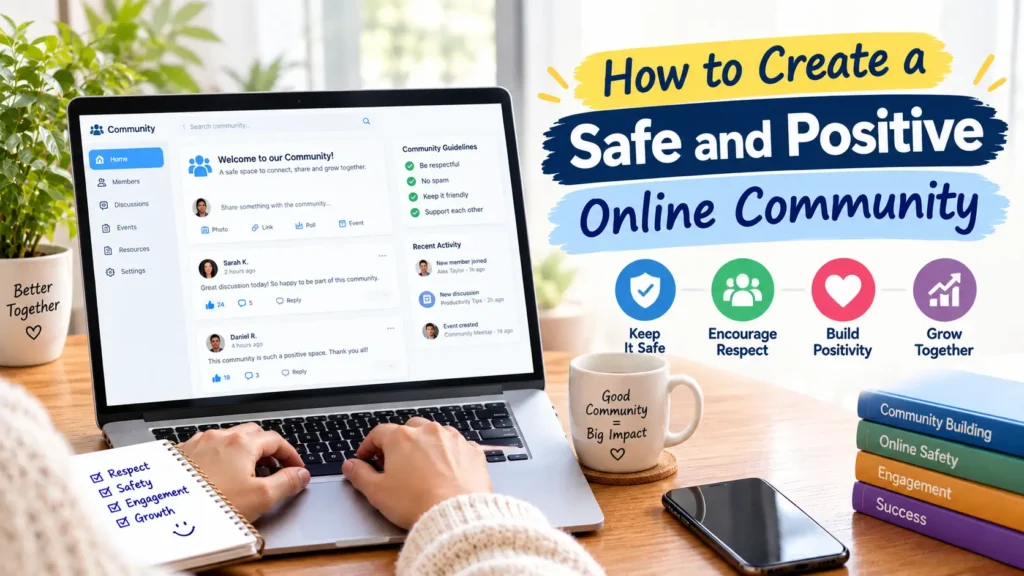

Creating a welcoming space for members is essential in today’s digital world. Many people seek environments where they can share ideas without fear. Establishing a safe online community starts with clear expectations from day one. This helps everyone feel respected and valued.
According to recent data, 65% of Americans support tech companies in managing false information. This highlights a growing demand for well-structured digital spaces. By implementing effective community guidelines, creators can foster connections rather than conflict.
When safety is prioritized, members can express themselves freely. This leads to a vibrant atmosphere where ideas flourish. Trust is the foundation of any successful community, making it vital to define values early on.

Key Takeaways
- Clear expectations help create a respectful environment.
- Public support exists for managing false information.
- Effective guidelines foster meaningful connections.
- Prioritizing safety encourages free expression.
- Trust is essential for community success.
Understanding the Foundations of a Safe Online Community
Establishing a nurturing environment for participants is crucial in today’s interconnected world. Every group is unique, so the rules should reflect the culture you want to create. Before drafting any rules, it’s essential to define your community’s mission. This helps all members understand their purpose for joining.
Next, assess the current dynamics. Look for pain points, such as awkward posts or off-topic comments that disrupt the overall tone. A strong mission statement, like those used by solopreneur groups, guides members to engage with honesty and kindness.
Identify the specific needs of your space, whether it’s a freelance writer group or a fitness hub. This helps set the right tone. Establishing a governance philosophy early on will clarify whether you will moderate everything yourself or empower your members to assist.
By analyzing the current landscape, you can create a welcoming place where interactions are driven by shared values rather than just a list of prohibitions.
Building Clear Community Guidelines
Effective community guidelines must clearly define expected behaviors. For instance, encouraging thoughtful feedback and active listening helps new members engage with confidence. You must also explicitly list prohibited behaviors, such as hate speech, harassment, or inappropriate content. This ensures that everyone knows exactly what is not allowed.
The core components of your rules should include a clear mission statement that reminds people why the group exists. Providing a reporting mechanism is vital, as it allows members to feel safe speaking up when they encounter behavior that feels off.
Your guidelines should distinguish between big-picture expectations and specific dos and don’ts that are enforceable by your moderation team. By clearly outlining these rules, you protect your time and ensure that your space remains a platform for meaningful contribution rather than conflict.

Implementing Online Community Moderation Best Practices
Moderation is the backbone of a thriving digital space, ensuring respectful exchanges. To create a healthy environment, both proactive and reactive strategies are essential. Proactive moderation, such as employing AI filters, can effectively prevent spam and unwanted content from reaching your members.
On the other hand, reactive moderation allows your team to address issues as they arise. This includes utilizing reporting systems and human oversight to handle violations. For instance, during the January 2021 surge of Reddit’s r/WallStreetBets, a combination of automated keyword filters and human interventions maintained order.
Clearly defining roles within your moderation team, like Lead Moderator or Content Reviewer, is vital. This approach prevents burnout and ensures consistent enforcement of your rules. Additionally, best practices suggest providing your team with a private space for collaboration, allowing them to discuss edge cases and coordinate actions effectively.
By balancing these strategies, you create a self-regulating ecosystem. This helps your moderation team manage the daily volume of interactions without feeling overwhelmed.
Tailoring Guidelines to Fit Your Unique Community
Every group thrives when its rules resonate with the members’ values and expectations. This alignment fosters a sense of belonging and respect. To achieve this, consider the example set by Duolingo, which promotes kindness in grammar corrections. Such an approach encourages positive interactions among members.
In professional spaces like Women in Tech SEO, the message is clear: there is no such thing as a stupid question. This zero-tolerance policy for spam creates a welcoming atmosphere. Your guidelines should reflect your brand’s voice, ensuring the language used is consistent with the overall tone of your space.
Avoid complex legal jargon; instead, use simple, direct language. This makes your rules easy for all members to understand and follow. If your focus is on visual content, specifically address plagiarism and the importance of crediting original creators.
By tailoring your rules to your specific niche, you ensure they feel relevant and authentic to the people participating in your space.

Scaling Your Community with Clear Rules and Engagement
As your group expands, maintaining a cohesive environment becomes increasingly important. Regularly reviewing your policies ensures they effectively cater to a larger and more diverse audience. This adaptability is crucial for a thriving atmosphere.
Integrating member feedback is a proven strategy for success. According to a 2022 CMX report, communities that leverage feedback enjoy a remarkable 25% higher retention rate. This shows that when members feel their input is valued, they are more likely to contribute positively.
Establishing clear rules that evolve alongside your members is essential. This helps maintain your culture as you grow. A feedback loop allows you to understand what is working and what isn’t, guiding data-driven decisions for your space.
Scaling requires adaptability. A sudden influx of new members may necessitate stricter onboarding or more proactive engagement efforts. This ensures that the core values remain intact while welcoming new voices.

| Strategy | Description | Impact |
|---|---|---|
| Regular Policy Review | Assess rules for effectiveness | Ensures relevance as community grows |
| Member Feedback Integration | Encourage suggestions from members | Boosts retention and engagement |
| Clear Rules Evolution | Adapt rules to fit member needs | Maintains culture during growth |
| Feedback Loop Creation | Regularly gather insights | Informs data-driven decisions |
Leveraging Technology and Tools for Community Management
Harnessing the power of technology is key to effective community management. By utilizing robust platforms, you can streamline processes and enhance member interactions. For instance, using a platform like BuddyBoss allows you to manage group moderation, content reporting, and member roles from a centralized dashboard.
Pedro Hernandes, a community manager at Circle, emphasizes the importance of leveraging profanity filters. These filters help manage the tone of discussions, ensuring that conversations remain respectful and constructive.
Additionally, advanced moderation tools can be integrated via APIs. These tools provide features like sentiment analysis and spam detection, which go beyond native platform capabilities. You should make sure that your chosen tools notify your team immediately when a member reports inappropriate content.
While automation is a powerful ally, it’s crucial to maintain human oversight in your management strategy. By investing in the right technology, you reduce the manual workload on your team and create a more consistent experience for your members.
Member Engagement and Resolving Conflicts
Engaging members effectively is key to fostering a thriving environment. Promoting positive interactions can be easier with a recognition system. Rewarding members for helping others or sharing quality content encourages a supportive atmosphere.
When disruptive behavior arises, it’s often best to address the issue privately first. This approach can help de-escalate situations before they become public conflicts. For instance, Mila Clarke’s Glucose Guide Diabetes Support community provides a direct contact for members to feel safe reporting issues.
For a first-time violation, a friendly reminder about your guidelines can be more effective than an immediate ban. Consistently applying rules to all members, whether they are long-time contributors or new members, fosters a sense of fairness.
By balancing firmness with empathy, you can resolve conflicts respectfully. This encourages continued engagement and helps maintain a positive atmosphere within your group.
Conclusion
Nurturing a vibrant environment for participants is a continuous journey that requires effort. By implementing the best practices outlined in this guide, you can create a space where people feel valued and motivated to contribute.
Remember, your community is a living ecosystem. It’s essential to remain flexible and adapt your approach as your members evolve. With the right tools and a commitment to clear rules, you can scale your platform without burning out your leadership team.
We hope this guide has inspired you to take the next step in fostering a healthy and thriving digital environment for everyone.
FAQ
What are the key elements of effective community guidelines?
Effective guidelines should clearly outline expected behaviors, prohibited actions, and the consequences for violations. They should be easy to understand and accessible to all members.
How can I assess the current dynamics of my community?
Conduct surveys or polls to gather feedback from members. Observe interactions and discussions to identify any issues or areas for improvement.
What strategies can I use for community moderation?
Implement both proactive and reactive strategies. Proactive measures include setting clear rules, while reactive strategies involve addressing issues as they arise, using moderation tools effectively.
How can I tailor guidelines to fit my community’s culture?
Engage with members to understand their values and preferences. Adjust the language and tone of the guidelines to reflect the unique characteristics of your group.
What tools can help with community management?
Utilize platforms like BuddyBoss for community building and advanced moderation tools for content review. Automation can also streamline moderation processes.
How can I promote positive interactions among members?
Encourage respectful communication and recognize positive contributions. Implement programs that reward members for engaging in constructive discussions.
What should I do if disruptive behavior occurs?
Address the behavior promptly and privately. Use your guidelines to determine appropriate actions, such as warnings or temporary suspensions, to maintain a positive environment.