
Hey there! If you’re reading this, you’re probably knee-deep in the world of B2B SaaS. You know the drill: the constant hustle to keep users engaged, the endless quest for “community”, and the looming pressure to host events that people actually want to attend. I’ve been there. I’ve spent countless late nights staring at registration numbers, wondering if anyone would actually show up, and I’ve experienced the pure, unadulterated adrenaline rush of a virtual room full of engaged, chatting members who are genuinely excited to be there. It’s a rollercoaster of emotions, but it’s one that I wouldn’t trade for anything because of the incredible impact it can have on a business and its people.
But let’s be real for a second. Most virtual events in our space are… well, boring. They’re often just glorified sales pitches disguised as “educational webinars”. I’ve sat through enough of them to know that if you want to build a real community, you have to do things differently. You have to stop talking at people and start talking with them.
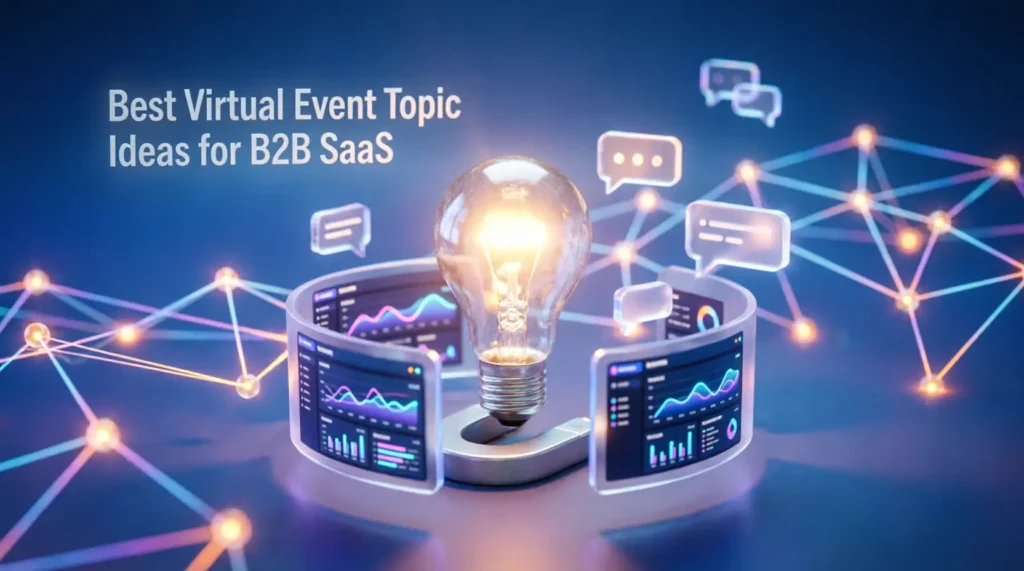
In this guide, I’m going to share my personal journey through the highs and lows of virtual events. I’ll give you my honest opinion on what works and what’s a total waste of time. I’ll even share a rather embarrassing failure of mine that taught me more than any “success” ever could. We’re going to dive into five killer topic ideas that have worked for me and my peers, and we’ll even look at the actual science behind why these connections matter so much.
The Science of Connection: Why Community is More Than Just a Metric
Before we get into the “how-to”, let’s talk about the “why”. We often treat community engagement as just another KPI in a spreadsheet. But for the people on the other side of the screen, it’s much more than that. It’s about connection. And as it turns out, connection is a fundamental human need with massive health implications.
I used to think that “community building” was just a marketing buzzword. But then I started looking into the research. Authoritative medical sources, like the World Health Organization (WHO) and the Centers for Disease Control and Prevention (CDC), have found that social connection is a critical factor for both mental and physical health.
According to the WHO, social connection can protect health across our entire lifespan. It can reduce inflammation, lower the risk of serious health problems, and foster mental well-being [1]. The CDC goes even further, noting that social connection can help reduce the risk of chronic diseases like heart disease, stroke, dementia, and depression [2].
When we create spaces for our B2B SaaS users to connect, we’re not just helping our business; we’re actually contributing to their overall well-being. Research published in PMC highlights that social connection plays a vital role in preventing mental health problems and aiding in recovery [3].
In my opinion, this changes the game. It’s not just about “user retention” or “LTV”. It’s about creating a space where people feel seen, heard, and supported. When you host a virtual event that actually connects people, you’re doing something good for them on a biological level. That’s a pretty powerful motivator, don’t you think?
My Big Failure: The Day I Hosted a Webinar for… No One
A few years back, I was working with a promising B2B SaaS startup. We had just launched a new feature, and I was convinced that everyone needed to hear about it. I spent weeks preparing a “Revolutionary Feature Launch Webinar”. I made the slides perfect. I practised my script until I could say it in my sleep. I even bought a fancy new microphone.
The day of the event came. I logged in early, straightened my hair, and waited. And waited. Five minutes passed. Ten minutes. The “Participants” counter stayed stubbornly at zero. I refreshed the page. I checked my internet connection. Nothing.
I ended up presenting my “revolutionary” slides to an empty virtual room. I felt like a total failure. I had spent so much time and energy on something that no one cared about.
What went wrong? Looking back, it’s obvious. I had made the event all about us. I was talking about our feature, our company, and our success. I hadn’t asked our community what they wanted to learn. I hadn’t addressed their pain points. I was trying to sell, not connect.
That “empty room” was the best thing that ever happened to my community strategy. It taught me that if you want people to show up, you have to provide value that isn’t just about your product. You have to make it about them. Since then, I’ve shifted my focus to topics that solve real problems for our users, and the difference has been night and day.
Why Virtual Events Matter for B2B SaaS (My Honest Opinion)
In my honest opinion, virtual events are the absolute lifeblood of a modern B2B SaaS community. Why do I feel so strongly about this? Because SaaS, by its very nature, is inherently intangible. You can’t touch it, you can’t feel it, and often, you don’t even see the people who built it. People aren’t just buying a piece of software; they’re buying a solution to a problem, a promise of a better, more efficient way of working, and a partnership with a company they trust.
Virtual events are the bridge that connects that intangible software to the very real humans who use it. They humanise the brand in a way that no email or blog post ever could. They give users a chance to see the faces behind the code, to hear the passion in their voices, and to realise that they’re part of something much bigger than just a monthly subscription. They provide a unique, high-fidelity platform for real-time feedback, which is absolutely invaluable for product development and customer success. Without these touchpoints, a SaaS brand risks becoming just another line item on a budget, easily replaceable and quickly forgotten.
But here’s the thing: you can’t just host an event and expect magic to happen. You have to be intentional. You have to stop using those tired, corporate-speak titles and start using language that resonates. You have to be willing to be a little bit vulnerable and a lot helpful.
The most successful virtual events I’ve seen aren’t the ones with the highest production value. They’re the ones where people feel comfortable enough to ask “dumb” questions and share their own struggles. That’s where the real community magic happens.
Topic Idea 1: Product Masterclasses (Go Beyond the Basics)
One of my favourite topic ideas is the “Product Masterclass”. Now, don’t confuse this with a standard product demo. A demo shows people what your product does. A masterclass shows them how to achieve a specific result using your product.
Instead of “How to Use Our CRM”, try something like “How to Build a High-Converting Sales Pipeline in 30 Minutes”. See the difference? One is a manual; the other is a solution.
•Focus on a specific workflow: Pick a common task your users struggle with and walk them through the most efficient way to do it.
•Share “pro tips”: Show them the hidden features and shortcuts that only power users know.
•Real-world examples: Use actual use cases (with permission, of course) to show what’s possible.
•Interactive Q&A: Leave plenty of time for people to ask about their specific setups.
In my opinion, these masterclasses are great because they provide immediate, tangible value. Users leave feeling more competent and more successful with your tool. And a successful user is a loyal user.
Topic Idea 2: Peer-to-Peer Roundtables (The Power of the Group)
If you want to spark real connection, try a peer-to-peer roundtable. This is where you bring together a small group of users (maybe 8-12) to discuss a specific industry challenge. You’re not the “expert” here; you’re the facilitator.
•Pick a meaty topic: Something like “How We’re Handling AI Adoption in Our Marketing Team” or “The Biggest Challenges in Scaling a Remote Sales Force”.
•Keep it intimate: Use breakout rooms if you have a larger group.
•Encourage sharing: Start with a few prompt questions, but then let the conversation flow naturally.
• Summarise the takeaways: Send a follow-up email with the key insights shared by the group.
I love roundtables because they tap into the collective wisdom of your community. Users love hearing from their peers—people who are “in the trenches” with them. It builds a sense of camaraderie that you just can’t get from a one-way presentation. Plus, it takes the pressure off you to have all the answers!
Topic Idea 3: The “Future of [Industry]” Trend Reports
People in B2B SaaS are always looking for an edge. They want to know what’s coming next so they can stay ahead of the curve. Hosting an event focused on future trends is a great way to position your brand as a thought leader.
• Do your homework: Research the latest industry data and reports.
•Invite an outside expert: Bring in a consultant, an analyst, or a well-known industry figure to share their perspective.
•Make it visual: Use charts and data visualisations to make the information easy to digest.
•Connect it back to your product (subtly): Discuss how your tool is evolving to meet these future challenges.
In my opinion, these events are high-value because they provide a “big picture” perspective that busy professionals often lack. It shows that you’re not just focused on today’s features but on tomorrow’s success. It builds trust and authority.
Topic Idea 4: Ask-Me-Anything (AMA) with the C-Suite
Want to really humanise your brand? Put your founders or C-suite executives in the hot seat. An AMA (Ask-Me-Anything) session is a great way to build transparency and trust.
•Be open and honest: Encourage users to ask anything about the product roadmap, the company’s vision, or even the biggest challenges they’ve faced.
•Keep it casual: This shouldn’t feel like a press conference. Use a conversational tone and don’t be afraid to show some personality.
•Prepare for the tough questions: Have a plan for how to handle criticisms or difficult queries with grace and honesty.
•Follow up on promises: If an executive says they’ll look into something, make sure it actually happens.
In my opinion, AMAs are incredibly powerful for building loyalty. Users appreciate the direct access to leadership and the feeling that their voices are being heard at the highest levels. It creates a sense of partnership rather than just a vendor-client relationship.
Topic Idea 5: Community Showcase (Celebrate Your Members)
Finally, why not let your community members take the lead? A “Community Showcase” is where you invite a user to present a project they’ve completed, a problem they’ve solved, or a success they’ve achieved using your product.
•Spotlight real success: This is the ultimate social proof. It shows other users what’s possible and gives them ideas for their own work.
•Reward your advocates: It’s a great way to show appreciation for your most engaged members and to give them a platform to build their own personal brands.
• Keep it practical: Ask the presenter to share the “how-to” as much as the “what”.
• Facilitate peer feedback: Encourage other members to ask questions and share their own similar experiences.
I absolutely love community showcases. They shift the focus entirely onto the users and celebrate their wins. It fosters a culture of sharing and support that is the hallmark of a truly great community. It’s heartwarming, inspiring, and highly effective.
Bonus Ideas: The Lightning Round
If those five didn’t spark your interest, here are a few more quick ideas:
•Virtual Coffee Chats: Low-pressure, 20-minute sessions for networking.
•Industry Deep Dives: Focused on a specific niche within your broader industry.
•”Fail-Forward” Fridays: A safe space to share mistakes and lessons learnt.
•Tool-Stack Show-and-Tell: Members share the other tools they use alongside yours.
•New Feature Sneak Peeks: Exclusive first looks for your most loyal members.
Frequently Asked Questions (FAQ)
Here are some common questions I get about virtual events for B2B SaaS:
Q: How often should I host virtual events?
A: In my opinion, consistency is more important than frequency. Start with once a month and see how your community responds. You can always scale up if the demand is there. Don’t overcommit and burn yourself out!
Q: What’s the best platform for virtual events?
A: There are so many great options out there—Zoom, Google Meet, Riverside, Circle, and more. The “best” one depends on your specific needs (e.g., number of participants, need for breakout rooms, recording capabilities). I personally like platforms that have built-in community features.
Q: How do I get people to actually show up?
A: This is the million-dollar question! Focus on providing clear value in your title and description. Use multiple channels for promotion (email, social media, in-app notifications). And most importantly, build a reputation for hosting events that are actually worth people’s time.
Q: How do I measure the success of a virtual event?
A: Don’t just look at registration numbers. Look at actual attendance, chat engagement, post-event survey results, and whether people are taking the “next step” you’ve suggested. In my opinion, qualitative feedback is often more valuable than quantitative metrics.
Q: What if no one asks any questions during the Q&A?
A: This happens! Always have a few “seed” questions ready to go to get the ball rolling. You can also ask people to submit questions in advance when they register.
Conclusion: Start Small, But Start Now
Building a thriving B2B SaaS community through virtual events is a marathon, not a sprint. It takes time, effort, and a willingness to experiment. But in my opinion, it’s one of the most rewarding things you can do for your brand and your users.
Remember the science: connection matters. When you create spaces for people to learn, share, and grow together, you’re doing something truly valuable. Don’t be afraid to fail—I’ve been there, and I promise you’ll survive. Just keep your focus on your users, stay authentic, and keep providing value.
I can’t wait to see what amazing virtual events you come up with. Now go out there and start connecting!
References
1. World Health Organization. (2025, June 30). Social connection linked to improved health and reduced risk of early death. https://www.who.int/news/item/30-06-2025-social-connection-linked-to-improved-heath-and-reduced-risk-of-early-death
2. Centers for Disease Control and Prevention. (2024, May 15). Social Connection. https://www.cdc.gov/social-connectedness/about/index.html
3. Holt-Lunstad, J. (2024). Social connection as a critical factor for mental and physical health. PMC. https://pmc.ncbi.nlm.nih.gov/articles/PMC11403199/