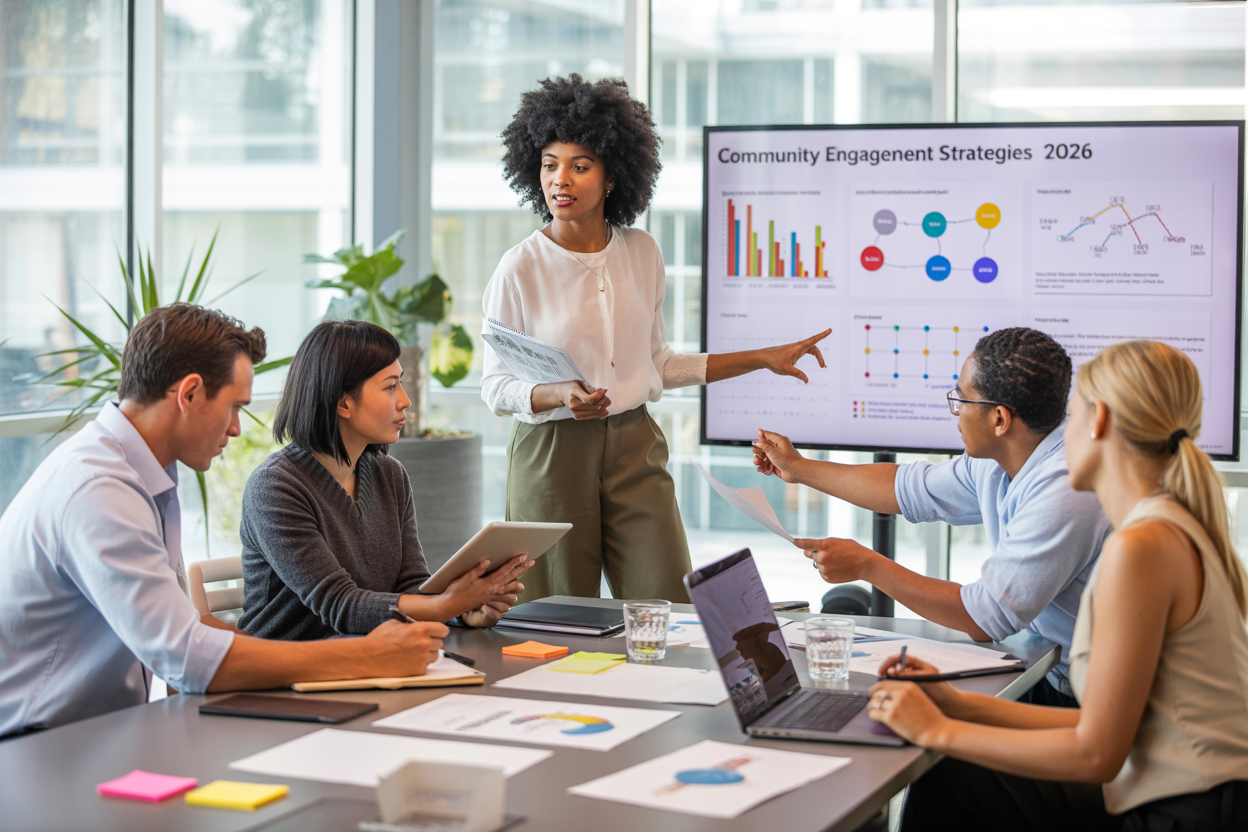
Building strong communities has become the secret weapon for organizations that want to thrive in 2026. The days of one-way broadcasts and surface-level interactions are over today’s audiences expect genuine connection and meaningful dialogue.
This comprehensive guide is designed for community managers, nonprofit leaders, business owners, creators, and local government officials who want to build engaged, loyal communities that drive real results. You’ll discover proven community engagement strategies that work across platforms and sectors, from building initial trust to scaling sustainable growth.
We’ll walk you through the foundation principles that make communities stick around, show you how to create a strategic planning framework that actually gets implemented, and reveal how to meet your community members exactly where they are not where you think they should be. You’ll also learn practical ways to measure what matters and avoid the common mistakes that kill community momentum before it starts.
The organizations winning in 2026 aren’t the ones throwing money at fancy tools or chasing viral moments. They’re the ones building authentic relationships, listening more than they talk, and creating spaces where people genuinely want to spend their time. Ready to join them?
Foundation Principles for Effective Community Engagement

Start with Clear Purpose and Define What Decisions Are Open for Influence
Successful community engagement begins with establishing clear goals that increase citizens’ knowledge about their community and the specific issues being addressed. Organizations must co-develop shared vision, purpose, mission, values and goals with community partners, ensuring transparency about which decisions are genuinely open for community influence. This foundation creates unity of purpose and prevents frustration that emerges when community input cannot meaningfully impact outcomes.
Build Authentic Relationships Over One-Off Interactions
Effective community building requires creating future opportunities for citizens to engage each other as a regular and ongoing component of the process. True partnerships emerge when power and control are delegated effectively within the community, moving beyond transactional interactions toward sustained collaboration. This approach leverages community expertise and experience alongside organizational resources, establishing leadership structures where community representatives play central roles and are appropriately rewarded for their contributions to long-term relationship building.
Strategic Planning and Implementation Framework

Define community values and purpose before choosing tools
Before selecting any engagement platforms or tools, establishing clear community values and purpose forms the foundation of effective strategic planning. A clear purpose helps grow buy-in internally and within your community, stay on track with your timeline, and adjust your strategy when needed. Whether aiming to increase overall participation from community members, engage specific groups, improve transparency, or become more data-driven, articulating these goals upfront ensures intentional community engagement efforts.
Select platforms where your audience already engages
Meeting communities where they are requires understanding their preferred communication channels and existing online behaviours. Community members want to participate on their terms and on their preferred platforms wherever they are, whenever they want, and via the medium that best suits their preferences. By combining online and offline methods across different rungs of the participation ladder and proactively reaching out to community members, organizations can ensure that everyone has opportunities to participate in meaningful ways.
Create content calendars and moderation plans for consistency
Effective community engagement requires clear and continuous communication strategies that bring people along on your project’s journey, making them feel more committed to the process. A solid communication strategy helps reach target audiences, identify the right channels, and tailor messages accordingly. Smooth internal organization becomes crucial as teams need to know how they want departments to be involved, who leads and supports projects, and how they can launch their own community engagement efforts.
Implement accessibility and inclusion as baseline expectations
An inclusive approach ensures that all voices matter equally, with special efforts included in engagement strategies to empower those who aren’t usually heard. Only by involving different groups and demographics within communities can organizations develop solutions and policies that truly benefit all. This requires ensuring language translation, ADA-compliance, transportation support, childcare, and collaborating with trusted messengers including community leaders and local groups to create culturally relevant engagement opportunities.
Meeting Communities Where They Are

Blend online and offline engagement approaches effectively
Today’s audiences are everywhere – they browse social media for inspiration, attend community meetings, participate in virtual events, and engage through multiple touchpoints. To succeed in community building, you must meet them where they are. A multi-channel approach means establishing your presence across various platforms your community members prefer, from social media and email to in-person gatherings and local events.
Offer multiple participation formats for diverse preferences
Different community members have varying comfort levels and preferences for engagement. Some prefer visual discovery through social platforms, while others want detailed information delivered via email newsletters or face-to-face interactions. Consider that younger audiences may be more engaged with social media while mature audiences may rely on mainstream media or community channels. The most effective strategy involves choosing formats where your target community is most active, rather than trying to be everywhere at once.
Respect time constraints with simple and clear processes
Modern community members value convenience above all. A successful engagement strategy respects their time and preferences by allowing them to participate on their terms. Some may want to ask quick questions via social media, while others prefer comprehensive information through structured channels. Providing these options reduces friction in the participation process and fosters positive perceptions of your community initiatives.
Use plain language and avoid technical jargon
Communications need to be accessible for your target audience, which involves ensuring content is presented in formats that community members prefer and understand. Consider that some people can fluently speak a language but may not be able to read complex technical documents. Written content should use simple, clear language, and in some cases, visual forms or audio messages may be more appropriate to help people understand step-by-step processes for community participation.
Building Trust Through Transparency and Accountability

Be honest about constraints, limitations, and what cannot change
Building community trust requires complete transparency about what can and cannot be modified. When engaging with communities, leaders must clearly communicate constraints, limitations, and unchangeable elements from the outset. This honest approach helps set realistic expectations and prevents disappointment that could damage the relationship between government and citizens.
Show outcomes and demonstrate how input influences decisions
Transparency in decision-making processes and accountability are crucial for maintaining community engagement. Community members often feel their opinions don’t influence decisions, leading to apathy and disengagement. Demonstrating how community feedback directly shapes outcomes builds trust and shows that input is valued and acted upon, creating positive deposits in the community trust account.
Close the loop by reporting back on feedback and actions taken
Accountability involves not only acknowledging community input but also demonstrating how it influences decisions through consistent follow-up communication. Closing the feedback loop by reporting back on actions taken ensures community members understand their contribution’s impact, strengthening the foundation for future engagement and collaboration.
Data-Driven Engagement and Meaningful Measurement

Use feedback data to identify participation gaps and common themes
Analyzing demographic data and response patterns reveals critical insights about who participates in your online community and who doesn’t. Track metrics like age groups, geographic reach, cultural backgrounds, and engagement depth to identify underrepresented segments. This data helps uncover common themes in member feedback and highlights gaps in participation that require targeted outreach strategies.
Handle data responsibly with clear privacy and compliance practices
Monitor meaningful engagement indicators including monthly active users, response rates, time spent in community platforms, and peer-to-peer content generation rather than superficial numbers. Track retention through returning user percentages and session depth while measuring sentiment through balanced feedback analysis. Ensure all data collection practices comply with privacy regulations like GDPR, avoiding personally identifiable information collection and maintaining transparent data usage policies for sustainable community growth.
Sector-Specific Community Engagement Approaches

Nonprofit strategies for mission storytelling and volunteer mobilization
Mission-driven organizations thrive when they center authentic storytelling around their impact and community experiences. Creating platforms for beneficiaries to share their own narratives builds genuine connection and credibility. Organizations like StoryCorps demonstrate how personal stories shift public perception and drive deeper engagement, transforming abstract missions into relatable human experiences that inspire action and sustained support.
Business and brand tactics for customer co-creation and feedback
Forward-thinking brands leverage community-based research and co-design to transform customers into genuine partners in product development. Advisory boards consisting of diverse customer segments provide structured feedback channels, while participatory processes give members real decision-making power over feature development and resource allocation. Platforms like GoPro successfully mobilize user-generated content through branded hashtags, creating collaborative ecosystems where customers actively participate in brand storytelling.
Creator community building for sustainable income and loyalty
Content creators achieve sustainable growth by establishing integrated ecosystems where courses, community, and content seamlessly connect under their own domain. Advisory boards of core members provide valuable input on curriculum development, while volunteer programs leverage experienced community members to mentor newcomers. Unified platforms eliminate friction between different touchpoints, dramatically boosting member retention and lifetime value compared to fragmented solutions.
Local government engagement for civic participation and transparency
Government entities enhance civic participation through participatory budgeting initiatives that give residents direct input on resource allocation decisions. Regular listening sessions and town halls create structured feedback mechanisms, while transparent communication about how community input influences policy decisions builds accountability. Multiple participation channels accommodate different communication preferences, ensuring inclusive access to democratic processes and fostering genuine partnership between officials and constituents.
Investment Strategies and Resource Allocation

Invest in Staff Skills and Capability Development Over Platforms Alone
Building effective online community engagement requires prioritizing human expertise alongside technological tools. When engaging communities in complex processes like budget planning, staff must be equipped to simplify technical language, create accessible visual aids, and facilitate meaningful dialogue through various platforms. Investment in capability development ensures team members can effectively manage both virtual town halls and in-person forums while maintaining transparency and accountability throughout the engagement process.
Budget Effectively Across Lean, Growth, and Scale Phases
Strategic resource allocation across different phases requires balancing technology tools with human connection and judgment. During lean phases, organizations can leverage free tools like social media platforms and basic survey tools for community feedback collection. As engagement efforts grow, investing in interactive budget websites and participatory budgeting software becomes essential. The scale phase demands comprehensive digital engagement platforms while maintaining the human elements that build trust and foster genuine collaboration with community members.
Leverage Free Tools and Community Resources to Reduce Costs
Cost-effective community engagement strategies utilize accessible platforms like social media channels, email updates, and virtual meeting tools such as Zoom or Teams. Organizations can implement budget simulations and online mapping tools to educate residents about complex financial decisions without significant investment. These free resources enable broader reach while creating interactive participation opportunities that help community members understand budgeting trade-offs and contribute meaningful input to decision-making processes.
Balance Technology Tools with Human Connection and Judgment
Effective community building requires strategic integration of digital platforms with authentic human interaction. While automated email updates and community dashboards provide efficient progress tracking, personal connections through public forums and budget workshops remain essential for building trust. Organizations must ensure that technology enhances rather than replaces the human elements of engagement, maintaining the accountability and transparency that foster genuine collaboration between agencies and their communities.
Common Pitfalls to Avoid and Best Practices

Avoid expecting immediate growth and focus on long-term relationship building
Many communities fall into the trap of treating engagement as a checkbox exercise rather than a meaningful process of relationship development. Authentic community building requires patience and consistent effort over time, as rushed approaches often fail to establish the trust necessary for sustained participation and collaboration.
Prevent over-moderation while maintaining community standards
Effective community management requires striking a careful balance between providing guidance and allowing organic interactions to flourish. Over-controlling conversations can stifle natural community growth, while under-moderation risks allowing negative behaviors to undermine the safe environment members need to participate authentically.
Foster peer-to-peer connections beyond leader-member interactions
Strong communities thrive when members connect directly with each other, not just with leadership. Creating opportunities for horizontal networking and collaboration builds a more resilient community structure where relationships extend beyond formal organizational boundaries.
Address toxic behavior quickly to protect community psychological safety
Swift response to harmful behaviors is essential for maintaining an environment where all community members feel valued and secure. When toxic behavior goes unchecked, it can quickly erode trust and drive away participants who might otherwise contribute meaningfully to community growth and engagement.

Community engagement in 2026 is fundamentally about building authentic relationships through purposeful, transparent interactions. The strategies that work are grounded in core principles: meeting communities where they are, prioritizing accessibility and inclusion, using data responsibly, and maintaining consistency in both communication and follow-through. Success requires clear planning frameworks, sector-specific approaches, and strategic resource allocation that focuses on building capabilities rather than just acquiring platforms.
The organizations that thrive understand that effective engagement is not about running activities—it’s about achieving meaningful outcomes that demonstrate genuine community impact. When you start with purpose, build trust through transparency, show clear results, and invest in long-term relationships over one-off interactions, you create communities that actively participate in shaping the decisions that affect their lives. Communities are not asking for perfection; they want to be heard and see that their voices make a real difference. By avoiding common pitfalls like over-moderation and expecting immediate results, while implementing proven measurement strategies and accessibility practices, your organization can build the kind of authentic community engagement that creates lasting value for everyone involved.