Building an online community in 2026 requires more than just setting up a platform and hoping members will show up. With the digital landscape more competitive than ever, successful community launches demand strategic planning, precise execution, and a clear roadmap from conception to growth.
This guide is designed for entrepreneurs, SaaS companies, educational organizations, and business leaders who want to create thriving online communities that drive real engagement and measurable business outcomes. Whether you’re looking to reduce support costs, boost customer retention, or build a knowledge-sharing hub, the foundation starts with proper planning.
We’ll walk you through the essential steps to secure internal buy-in and set success metrics that matter to your organization. You’ll learn how to define your community foundation and target the right audience from day one. We’ll also cover selecting and customizing the perfect platform for your needs, plus developing a content strategy and moderation framework that keeps members engaged long-term. Best How to Plan Your First Online Community Launch In 2026.
By the end of this guide, you’ll have a complete blueprint for launching your first online community with confidence, backed by proven best practices and actionable strategies that set you up for sustainable growth.
Secure Internal Buy-In and Set Success Metrics

Get organizational commitment and resource allocation across departments
Securing organizational commitment for your community launch requires identifying and engaging the right stakeholders early in the process. Start by conducting thorough stakeholder analysis to understand who will be impacted by, have influence on, or interest in your community project. This includes internal stakeholders such as the executive team, IT department, marketing and sales teams, customer support, and finance department, as well as external stakeholders like customers, partners, and investors.
Understanding what motivates each stakeholder is crucial for gaining their support. Senior management may be motivated by strategic alignment with business objectives and potential ROI, while IT teams might be concerned about technical requirements and security. Marketing teams often focus on engagement metrics and brand building opportunities, whereas customer support may value the community’s potential to reduce support ticket volume. Best How to Plan Your First Online Community Launch In 2026.
Build a compelling business case that clearly demonstrates the project’s value to each stakeholder. Define the opportunity by explaining what problem your community will solve and why it’s relevant to each department. Present your solution with specific details about how the community platform will address their challenges or meet their needs. Analyze the benefits using data and visualizations to show projected ROI, customer satisfaction improvements, or operational efficiency gains.
Establish SMART KPIs aligned with business objectives
Developing SMART (Specific, Measurable, Achievable, Relevant, Time-bound) KPIs ensures your community success can be quantified and directly tied to broader organizational goals. These metrics should reflect different types of value your stakeholders seek, whether that’s emotional buy-in through engagement metrics, intellectual buy-in through knowledge sharing indicators, or financial returns through conversion and retention rates.
Start by aligning your KPIs with existing business objectives. If your organization prioritizes customer retention, focus on metrics like community member retention rates, support ticket reduction, and customer lifetime value improvements. For growth-focused businesses, emphasize member acquisition rates, referral generation, and lead conversion from community interactions.
Consider both leading and lagging indicators in your KPI framework. Leading indicators might include daily active users, post engagement rates, and member onboarding completion rates, while lagging indicators could encompass customer satisfaction scores, revenue attribution, and long-term retention metrics.
Create accountability framework with defined roles and responsibilities
Establishing clear accountability prevents project delays and ensures stakeholder commitment remains strong throughout the launch process. Define specific roles and responsibilities for each team member and stakeholder group, making it explicit who owns what aspects of the community development and launch.
Create a RACI matrix (Responsible, Accountable, Consulted, Informed) to map out decision-making authority and communication flow. This framework should specify who is responsible for content creation, community moderation, technical implementation, marketing promotion, and ongoing performance monitoring.
Regular check-ins and milestone reviews help maintain accountability and allow for course corrections when needed. Schedule these touchpoints in advance and make attendance mandatory for key stakeholders to demonstrate ongoing organizational commitment to the project.
Choose one primary goal to focus on initially
While communities can serve multiple purposes, focusing on one primary goal initially increases your chances of success and makes it easier to secure stakeholder buy-in. This focused approach allows you to allocate resources more effectively and measure success more clearly.
Common primary goals for new communities include customer support deflection, user engagement and retention, product feedback collection, or thought leadership establishment. Choose the goal that best aligns with your organization’s most pressing business need and has the strongest stakeholder champion. Best How to Plan Your First Online Community Launch In 2026.
Communicate this primary focus clearly to all stakeholders, explaining how secondary benefits will naturally emerge as the community matures. This approach helps manage expectations and prevents scope creep that could derail your launch timeline or dilute your efforts across too many objectives.
Define Your Community Foundation and Target Audience

Align community purpose with broader organizational goals
Your community’s success depends heavily on establishing clear alignment between your community objectives and your organization’s strategic goals. Before launching, determine whether your community will serve as a cost-effective market research tool, a platform for customer engagement, or a mechanism for driving product innovation. The reference research shows that 75% of organizations find managing online communities requires less budget while delivering valuable insights, making this alignment crucial for securing ongoing support.
Consider how your community will integrate with existing business processes. Will it replace traditional research methods or supplement current initiatives? Understanding this relationship helps determine the appropriate community size, engagement frequency, and resource allocation. Organizations typically see communities work best when they serve multiple organizational needs simultaneously – from gathering real-time customer insights to fostering brand loyalty and reducing traditional market research costs.
Conduct comprehensive audience research and segmentation
Effective audience research forms the foundation of any successful community launch strategy. Your target audience research should examine both demographic characteristics and behavioral patterns to ensure optimal engagement. The data shows that different audience segments require customized engagement plans – how you interact with millennials differs significantly from engaging with B2B professionals or older adults. Best How to Plan Your First Online Community Launch In 2026.
Start by analyzing your existing customer base and identifying key segments that would benefit most from community participation. Consider factors such as digital engagement preferences, communication styles, and research participation willingness. B2B audiences, for instance, often require different incentive structures and communication approaches compared to consumer segments. The research indicates that branded communities typically achieve better response rates and lower incentive costs, particularly when targeting loyal customers who have intrinsic motivation to participate.
Create detailed member personas based on demographics and needs
Developing comprehensive member personas ensures your community platform and engagement strategies resonate with your target participants. These personas should encompass both demographic details and deeper behavioral insights, including preferred communication methods, technology comfort levels, and motivation for community participation.
The reference content emphasizes that successful communities recognize not everyone recruited for quantitative surveys will participate in qualitative discussions or video journals. Your personas should reflect these participation preferences – identifying which members prefer quick surveys versus in-depth discussions or mobile missions. For example, create distinct personas for highly engaged community advocates who participate in multiple activity types versus survey-only participants who provide quantitative feedback but avoid open forum discussions.
Consider creating tiered persona categories that reflect different engagement levels and capabilities. This approach allows for more targeted recruitment and ensures you can meet diverse research needs while maintaining appropriate community size and cost efficiency.
Set specific, measurable objectives for community outcomes
Establishing clear, measurable objectives provides the framework for evaluating your community’s success and demonstrating value to organizational stakeholders. Your objectives should align with the broader organizational goals identified earlier while being specific enough to track progress effectively.
Define both quantitative and qualitative success metrics. Quantitative measures might include member retention rates, project completion rates, and cost savings compared to traditional research methods. The research shows that successful communities typically engage members at least twice monthly, with larger communities requiring at least one paid project per participant monthly to maintain engagement. Best How to Plan Your First Online Community Launch In 2026.
Qualitative objectives should focus on insight quality and depth. Consider measuring the actionable insights generated, speed of feedback collection, and participant satisfaction levels. Set realistic expectations for community growth and engagement – communities with 50 to 5,000 participants are most common, with larger sizes requiring careful consideration of platform costs and engagement sustainability.
Your objectives should also account for the community type you’re implementing. Full-service communities require different success metrics than DIY approaches, and hybrid communi-panels need objectives that reflect both quantitative and qualitative research capabilities.
Select and Customize Your Community Platform

Evaluate platforms based on essential features and scalability
Now that you’ve established your community foundation and target audience, selecting the right platform becomes critical for your launch success. The platform comparison reveals several key players, each with distinct advantages for different community types.
Circle emerges as the most comprehensive solution, offering community spaces for discussions, events, and content sharing, plus flexible monetization tools and native website building capabilities. With pricing starting at $89/month, Circle provides full-funnel analytics, AI-powered community management, and white-label options for branded apps through Circle Plus.
Mighty Networks excels for network-based communities with its branded spaces resembling private social networks. Starting at $79/month, it offers built-in course creation tools, event hosting, and peer-to-peer networking features that support community growth.
For professional communities, Slack provides real-time messaging with channels and integrations with tools like Google Drive and Trello, starting at $7.25/user/month. Meanwhile, Discord serves gaming and crypto communities exceptionally well with custom servers and bot integrations.
Kajabi targets course-centric creators with comprehensive course creation tools and community spaces, though pricing starts higher at $143/month. Bettermode offers extensive customization for brand communities, while Swarm prioritizes video-first interactions starting at $19/month.
Consider your community’s primary purpose, expected member capacity, and required features when evaluating these platforms for long-term scalability. Best How to Plan Your First Online Community Launch In 2026
Integrate brand elements for consistent visual identity
With your platform selected, establishing consistent visual identity becomes essential for professional community presence. Most modern community platforms offer extensive branding customization options to align with your existing business identity.
Circle provides comprehensive white-labeling capabilities, allowing complete visual customization including logos, color schemes, and branded mobile apps through Circle Plus. This ensures seamless integration with your existing brand guidelines across all community touchpoints.
Mighty Networks offers branded community spaces with flexible visual customization options. You can incorporate your brand colors, logos, and visual elements to create a cohesive experience that feels like an extension of your main business platform. Best How to Plan Your First Online Community Launch In 2026
Bettermode stands out for businesses requiring strong branding control, offering full customization through design blocks, CMS models, and theming options. This platform particularly suits enterprises needing detailed brand compliance and visual consistency.
For platforms with limited customization like Slack or Discord, focus on incorporating brand elements through custom channel names, profile images, and community guidelines that reflect your brand voice and values.
Ensure seamless integration with existing business tools
Integration capabilities directly impact your community’s operational efficiency and member experience. The platform you choose must connect smoothly with your current business infrastructure to avoid workflow disruptions.
Circle excels in this area with robust integrations including Zapier, Google Analytics, and various marketing tools. These connections enable automated workflows, data synchronization, and comprehensive analytics tracking across your business ecosystem.
Slack offers extensive integrations with professional tools like Google Drive, Notion, and Trello, making it ideal for communities that rely heavily on collaborative workflows and document sharing.
Kajabi provides built-in marketing automation and course delivery systems, reducing the need for external integrations while offering comprehensive digital business functionality within a single platform.
Bettermode includes CRM integrations essential for businesses managing customer relationships alongside community engagement. This feature proves particularly valuable for support communities and customer success initiatives.
Consider your existing tech stack when evaluating integration requirements. Platforms with limited integration capabilities may require additional tools or manual processes to maintain operational efficiency.
Test platform functionality and user experience thoroughly
Before committing to your chosen platform, comprehensive testing ensures optimal member experience from launch day. Most platforms offer free trials or demo periods specifically for this evaluation phase.
Circle, Mighty Networks, and Kajabi all provide 14-day free trials, allowing thorough testing of core features, member workflows, and administrative functions. Use this period to simulate real member interactions and test all planned community features.
Slack offers a free plan with limited features, enabling extended evaluation of basic functionality before upgrading to paid plans. Similarly, Discord provides free access to core features, though premium features require Nitro subscriptions.
During testing, focus on critical user journeys: member registration, content posting, event participation, and mobile experience. Test administrative functions including moderation tools, analytics dashboards, and integration functionality.
Bettermode offers a free starter plan for initial testing, while Swarm provides affordable entry-level pricing at $19/month for comprehensive feature evaluation. Document any limitations or issues discovered during testing to inform your final platform decision and launch planning.
Create test scenarios matching your anticipated member behaviors and community goals to ensure the platform supports your specific launch strategy and growth plans.
Develop Your Content Strategy and Moderation Framework

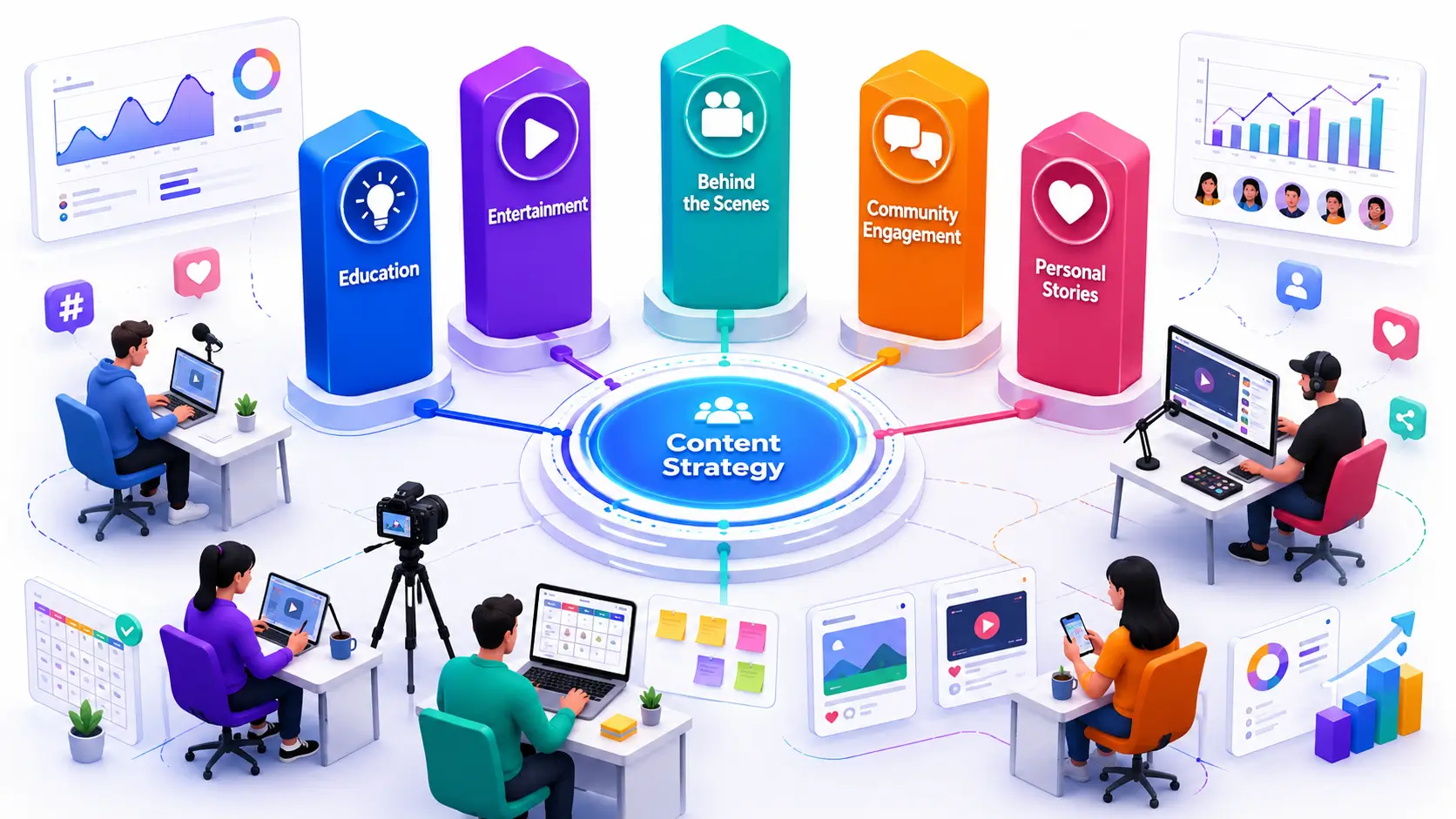
Create diverse content types including guides, discussions, and multimedia
Now that we have covered your community platform selection, establishing diverse content types forms the foundation of sustained member engagement. Your content strategy should include comprehensive guides that serve as valuable resources for community members, helping them solve problems and learn new skills within your niche. These educational materials position your community as a go-to destination for expertise and support.
Discussion-based content drives meaningful interactions between members. Create conversation starters, polls, and thought-provoking questions that encourage participation and knowledge sharing. This approach helps foster connections and builds the collaborative culture essential for community growth.
Multimedia content significantly enhances engagement levels across your platform. Videos, infographics, podcasts, and interactive webinars provide variety in how members consume and share information. Different content formats cater to various learning preferences, ensuring broader appeal and accessibility for your diverse member base.
Content seeding plays a crucial role in establishing initial community momentum. Prepare a library of engaging posts, resources, and discussion topics before launch to maintain consistent activity during the critical early phases when organic member contributions may be limited.
Build comprehensive community guidelines and content policies
Creating clear, simple guidelines forms the cornerstone of effective community management. Your community guidelines should explicitly outline acceptable behavior, prohibited content types, and the consequences for violations. Specify that harassment, hate speech, spam, and personal attacks will not be tolerated, while clearly defining what constitutes positive contribution.
These rules must be easily accessible and regularly referenced to keep them top of mind for all members. Consistency in enforcement builds trust among community members, as they need confidence that violations will be addressed swiftly and fairly. Ambiguity leads to frustration, so establish clear consequences ranging from warnings to temporary suspensions or permanent removal.
Your content policies should address legal compliance requirements and brand alignment. Include guidelines for user-generated content, intellectual property respect, and data privacy considerations. Make these guidelines part of your community culture by featuring them prominently in onboarding materials and community spaces.
Assemble and train dedicated moderation team with clear responsibilities
Building an effective moderation team requires careful selection and comprehensive training. Moderators serve as the guardians of your community culture, setting the tone for respectful interactions and maintaining a safe environment for all members. They should be equipped with conflict resolution techniques, deep understanding of community guidelines, and access to necessary moderation tools.
Training should cover de-escalation strategies, consistent rule enforcement, and recognition of positive behavior patterns. Moderators must understand how to model positive engagement by encouraging diverse perspectives, fostering thoughtful dialogue, and creating meaningful community content that sparks further discussion.
Establish clear moderation responsibilities and decision-making frameworks. Create a private support space where moderators can collaborate, discuss challenging situations, and share best practices. This dedicated environment allows them to seek feedback on questionable content and leverage collective expertise for informed, consistent approaches to community management.
Regular training updates ensure moderators stay current with evolving community needs and platform features. Support your moderation team through recognition programs and ongoing feedback, as this often thankless role requires strong motivation and appreciation to maintain effectiveness.
Implement content seeding strategy for initial engagement
Content seeding creates the initial momentum necessary for community success during launch phases. Develop a comprehensive library of engaging posts, valuable resources, and discussion starters before going live. This preparation ensures consistent activity when organic member contributions remain limited in early stages.
Your seeding strategy should include a mix of educational content, conversation starters, and multimedia resources that demonstrate the value members will receive. Plan content that showcases community purpose while encouraging member participation through questions, polls, and collaborative projects.
Leverage crowdsourced moderation principles by preparing content that encourages members to participate in maintaining community integrity. Include clear reporting mechanisms and guidelines that empower users to flag inappropriate material, creating a collaborative approach to community maintenance from the beginning.
Schedule seeded content strategically to maintain regular activity without overwhelming new members. This approach helps establish posting rhythms and engagement patterns that will naturally evolve as your community grows and members become more active contributors.
Plan Your Launch Communications and Promotion Strategy

Develop multi-channel marketing approach across email and social media
Now that your community foundation is established, executing a comprehensive marketing strategy across multiple channels becomes critical for launch success. A multi-channel approach ensures maximum visibility and reaches your target audience through their preferred communication methods.
Email marketing serves as your primary direct communication channel, allowing you to deliver personalized launch announcements to specific segments of your audience. Craft targeted email sequences that build anticipation leading up to the launch date, highlighting key community features and exclusive early access opportunities. Social media platforms extend your reach beyond existing contacts, enabling organic discovery and viral potential through shares and engagement.
Coordinate your messaging across LinkedIn for professional communities, Twitter for real-time updates, Facebook for broader audience reach, and platform-specific channels that align with your target demographic. Each platform requires tailored content that respects the unique communication style and user expectations while maintaining consistent brand messaging about your community’s value proposition.
Engage key stakeholders and influencers to amplify reach
Building strategic partnerships with stakeholders and industry influencers dramatically amplifies your community’s launch visibility beyond your immediate network. Identify thought leaders, existing customers, and industry experts who align with your community’s mission and can authentically advocate for your platform.
Develop a stakeholder engagement plan that provides these key individuals with early access, exclusive content, or special recognition within the community. This approach creates genuine endorsements that carry more weight than traditional advertising. Influencers can share their authentic experiences with your platform, providing social proof that encourages their followers to join.
Coordinate outreach timing to ensure stakeholder communications align with your broader launch timeline. Provide stakeholders with ready-made content, key messaging points, and branded assets they can easily share across their networks while maintaining authenticity in their personal communication style.
Create compelling launch messaging that highlights community value
With your multi-channel strategy in place, developing compelling messaging that clearly articulates your community’s unique value becomes essential for driving member acquisition. Your launch messaging must immediately communicate what members will gain from participating and how your community solves specific challenges or fulfills particular needs.
Focus your messaging on concrete benefits rather than abstract concepts. Instead of simply stating “join our community,” specify outcomes like “connect with industry peers,” “access exclusive resources,” or “solve problems faster through collaboration.” This approach helps potential members visualize the direct impact of participation on their professional or personal goals.
Create message variations for different audience segments while maintaining core value propositions. Technical professionals might respond to messaging about knowledge sharing and problem-solving, while business leaders may be more interested in networking opportunities and strategic insights. Tailor your communication to speak directly to each segment’s primary motivations for community participation.
Coordinate timing across all promotional channels
Strategic timing coordination across all promotional channels ensures maximum impact and prevents message dilution during your community launch. Develop a detailed timeline that sequences your marketing activities for optimal engagement and conversion rates.
Plan your announcement sequence to build momentum progressively. Begin with internal stakeholder communications, followed by email announcements to your existing audience, then expand to social media and influencer outreach. This staged approach allows you to gauge initial response, make necessary adjustments, and create authentic buzz before broader public promotion.
Synchronize your content calendar to avoid overwhelming your audience while maintaining consistent visibility. Space announcements strategically across different platforms and timeframes to maximize reach without appearing repetitive. Consider time zones if your community targets global participation, ensuring announcements reach different geographic segments during their peak engagement hours.
Monitor engagement metrics across all channels during the launch period to identify which platforms and messaging approaches generate the strongest response. This data enables real-time optimization of your promotional strategy and provides valuable insights for future community growth initiatives.
Execute Testing and Prepare for Go-Live

Conduct thorough technical testing of all platform features
With your community platform configured and content strategy in place, comprehensive technical testing becomes critical before launch. Your testing phase should systematically evaluate every feature your members will interact with, from basic registration flows to advanced collaboration tools. Create detailed test scenarios that mirror real user journeys, ensuring registration processes work smoothly, discussion threads function properly, and notification systems deliver messages as expected.
Focus particularly on cross-device compatibility, as community members will access your platform from various devices and browsers. Test loading speeds, responsive design elements, and ensure all interactive features perform consistently across different technical environments. Document any bugs or performance issues during this phase, as addressing them now prevents member frustration later.
Run soft launch with select users to gather feedback
Following technical validation, implementing a soft launch with carefully selected users provides invaluable insights into the real-world community experience. Choose participants who represent your target audience and can provide constructive feedback on both functionality and user experience aspects.
During this testing phase, encourage participants to engage authentically with your platform features, content, and tools. Monitor their behavior patterns, noting where they encounter confusion or friction. Gather feedback through surveys, interviews, or direct observation sessions to understand both what works well and what needs improvement before your public launch.
Make final adjustments based on user testing insights
The feedback collected during soft launch testing directly informs your final pre-launch refinements. Prioritize adjustments based on frequency and severity of issues identified, focusing first on problems that could prevent successful member onboarding or core feature usage.
Common adjustments include simplifying navigation structures, clarifying messaging, or modifying workflow processes that proved confusing during testing. This iterative approach ensures your community platform launches with user-validated improvements, significantly increasing the likelihood of positive initial member experiences.
Prepare customer support resources for launch day
Preparing comprehensive support resources ensures smooth member experiences from day one of your public launch. Develop a knowledge base covering common questions about platform features, community guidelines, and troubleshooting steps. Create quick reference guides for both members and moderators, ensuring everyone understands available tools and support channels.
Establish clear escalation procedures for handling complex issues and ensure your support team understands the community’s purpose, rules, and key features. Having these resources ready before launch prevents delays in addressing member questions and maintains positive momentum during those critical first days.
Implement Analytics and Performance Tracking

Set up comprehensive analytics tools for real-time insights
With your community foundation established, implementing robust analytics tools becomes essential for understanding member behavior and optimizing engagement. Modern community platforms require a multi-layered analytics approach that combines native platform data with external tools to capture the full scope of community activity.
Start by leveraging your community platform’s built-in analytics capabilities, which typically provide basic metrics like member counts, post volumes, and engagement rates. However, these native tools often fall short when you need deeper insights or cross-platform visibility. Complement these with specialized analytics platforms that can aggregate data from multiple sources, providing a comprehensive view of your community ecosystem.
Consider implementing tools like Google Analytics for tracking website-based community activities, especially if your community includes forum discussions or resource centers. For distributed communities spanning multiple channels, platforms like Bevy offer native analytics that track event attendance, member participation, and chapter-level engagement across different locations and groups.
The key challenge with analytics tools is managing data from multiple platforms. Your members likely engage across various channels – from Slack and GitHub to Twitter and Reddit. A signal and automation platform can help consolidate this scattered data using AI and automation, bringing together community activity from all channels into a unified dashboard that provides actionable insights without manual data compilation.
Define key metrics based on community goals and objectives
Now that your analytics infrastructure is in place, defining the right metrics becomes critical for measuring success. Rather than focusing on vanity metrics like total member counts or likes, prioritize metrics that demonstrate real community health and business impact.
Membership metrics should track both quantity and quality of your member base. Monitor active members through daily active users (DAU), weekly active users (WAU), and monthly active users (MAU) to understand participation patterns. Include member type distribution – identifying influencers, contributors, and certified members – to gauge the composition of your community leadership structure.
Engagement metrics provide deeper insights into member participation. Track total platform activities including posts, replies, event attendance, and content sharing. Monitor peer-to-peer interactions, as these spontaneous member exchanges indicate community maturity and reduce dependency on moderators. Measure engagement per post to evaluate content strategy effectiveness, focusing on comments, reactions, and shares that demonstrate authentic interest.
Responsiveness metrics directly impact member satisfaction. Calculate response rate percentage by tracking posts that receive at least one reply, median response time, and the ratio of community member responses versus team member responses. These metrics reveal whether your community is reaching self-sustainability where members support each other.
Business impact metrics connect community activity to organizational goals. Track community-driven sales through unique purchase links, measure customer lifetime value (CLV) differences between community members and non-members, and monitor referral rates from community advocates. Include product usage data, feature feedback frequency, and support case reduction to demonstrate how community engagement translates to business value.
Create reporting systems that address multiple team needs
Different stakeholders require tailored reporting approaches to understand community impact relevant to their roles. Sales teams need visibility into community-driven leads and revenue attribution, while product teams focus on feature requests, bug reports, and user feedback patterns. Customer support teams benefit from tracking peer-to-peer knowledge sharing and support case reduction metrics.
Design customizable dashboards that allow each team to access relevant community data without information overload. Sales-focused reports should highlight community-attributed revenue, lead qualification through engagement scores, and account-based marketing performance improvements. Product teams need reports showing top discussion topics, feature request frequency, and user sentiment around specific product areas.
Community leaders require comprehensive reporting that combines quantitative metrics with qualitative insights. Include member retention rates, churn analysis by persona or entry point, and sentiment analysis alongside traditional engagement metrics. This balanced approach provides the complete picture needed for strategic decision-making.
Implement automated reporting systems that deliver regular updates without manual compilation. Weekly engagement summaries, monthly growth reports, and quarterly business impact assessments ensure consistent communication across teams while reducing administrative overhead.
Establish regular review cycles for performance optimization
With your reporting systems operational, establishing consistent review cycles ensures continuous improvement and strategic alignment. Create a structured approach that balances short-term tactical adjustments with long-term strategic planning.
Implement weekly tactical reviews focusing on immediate engagement patterns, response times, and member satisfaction indicators. These sessions should identify quick wins and address emerging issues before they impact overall community health. Track weekly trends in active participation, event attendance rates, and peer-to-peer interaction volumes.
Monthly strategic reviews should analyze deeper patterns in member behavior, retention cohorts, and business impact metrics. Examine 30-day, 60-day, and 90-day retention cohorts to identify onboarding effectiveness and long-term engagement trends. Review churn patterns by member type and engagement level to understand why members leave and implement preventive measures.
Quarterly comprehensive assessments provide opportunities for major strategic adjustments based on accumulated data insights. These reviews should connect community performance to broader business objectives, evaluating how engagement trends support customer acquisition, retention, and revenue goals. Use these sessions to adjust community goals, refine success metrics, and plan major initiatives for the following quarter.
Document insights and actions from each review cycle to build institutional knowledge about what drives community success. This practice ensures continuity as your team grows and provides valuable context for future decision-making processes.
Design Your Member Onboarding Experience

Create simple and valuable introduction sequences
Now that you’ve secured buy-in and defined your community foundation, designing effective member onboarding becomes critical for long-term success. Create introduction sequences that deliver simple, precise, and valuable information to new members without overwhelming them. Your onboarding should span the first 30-90 days, with the most critical period being the first week when members form lasting impressions. Design multiple touchpoints throughout this journey, including welcome emails, guided tours, and check-ins at 30, 60, and 90-day intervals to ensure sustained engagement.
Develop both standardized and personalized welcome processes
Introduce new members to community guidelines and culture
Implement engagement mechanisms to drive initial participation
Effective onboarding must balance standardized processes with personalized touches based on member attributes like role, experience level, or how they joined. Implement automated email sequences that gradually introduce community features and culture, while incorporating personalized elements like welcome videos from existing successful members or direct messages from community leaders. Focus on getting members to take their first meaningful action—whether introducing themselves, asking a question, or reacting to content—as this dramatically increases the likelihood they’ll return and become active participants in your growing community.
Build Long-Term Growth and Engagement Systems

Integrate community into product and business processes
Now that you have established your community foundation, the next critical step involves embedding community engagement into your organization’s core operations. True partnerships require delegating power effectively within the community, allowing members to co-create knowledge and solutions that directly improve your product offerings and business processes.
Develop advocacy programs to leverage superuser knowledge
With community integration underway, building robust advocacy programs becomes essential for sustained growth. Community engagement starts by changing internal attitudes and recognizing that your most committed members possess invaluable insights. These superusers naturally identify community needs and can help address challenges through their expertise and dedication.
Plan sustained engagement activities and member events
Event planning skills prove crucial for maintaining long-term community vitality. Regular programming should focus on creating opportunities for citizens to engage each other while building trust between your organization and community members. Effective engagement activities ensure continuous communication becomes an ongoing component of your community strategy.
Create continuous improvement strategy based on feedback and analytics
Program evaluation and data analysis capabilities enable informed decision-making for community enhancement. Analyzing community member feedback helps identify specific needs and determine resource allocation priorities. This systematic approach to improvement ensures your engagement efforts evolve based on actual member requirements rather than assumptions.
Successfully launching your first online community in 2026 requires systematic planning across nine critical areas: securing internal buy-in, defining your foundation and audience, selecting the right platform, developing content and moderation frameworks, planning communications, executing thorough testing, implementing analytics, designing onboarding experiences, and building long-term growth systems. Each step builds upon the previous one, creating a comprehensive foundation that transforms community creation from an overwhelming undertaking into manageable, sequential milestones.
The journey doesn’t end at launch—it begins there. Most communities take 6-12 months to reach meaningful engagement levels, making post-launch strategy and continuous optimization essential for sustained success. By following this structured approach and maintaining focus on creating meaningful connections that drive measurable business outcomes, you’ll be well-positioned to build a thriving community that serves both member needs and organizational goals.