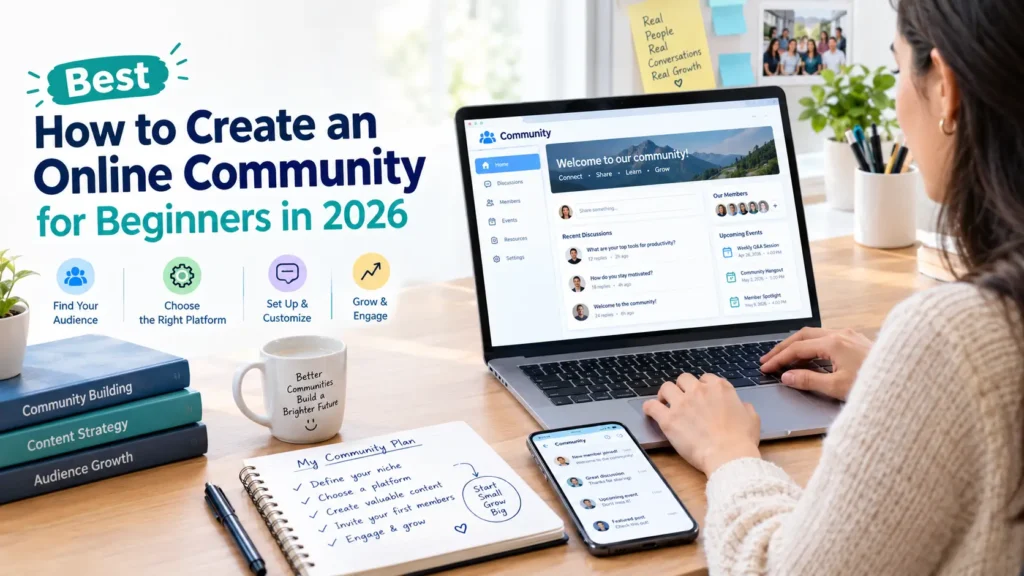

Building an online community might seem intimidating, but it’s one of the most rewarding ways to connect with your audience and grow your business. This guide is perfect for entrepreneurs, small business owners, and content creators who want to turn their followers into a thriving community. Best How to Create an Online Community for Beginners in 2026
Creating your own online community opens doors to deeper relationships with customers, valuable feedback, and new revenue streams. Many successful community builders earn thousands monthly through memberships, events, and exclusive content.
We’ll walk you through the essential steps to get started, including how to find your niche and define your community’s purpose, choose the right platform and set up effective moderation systems, and create engaging content that keeps members coming back for more. You’ll learn practical tips for community building that actually work, plus proven growth strategies to turn your small group into a bustling hub of activity.
Ready to build something meaningful? Let’s dive in.
Understanding Online Communities and Their Benefits

What defines an online community and its types
Best How to Create an Online Community for Beginners in 2026. An online community is a group of people with a shared interest or purpose who use the internet to communicate with each other. These virtual spaces serve as dynamic platforms for fostering engagement, building relationships, and creating valuable ecosystems that transcend traditional geographical boundaries.
The most impactful type for businesses is the branded online community – a professional network that brings people together around a shared, organization-based experience to facilitate expansive online collaboration and growth. Unlike casual social media groups, branded communities are purposeful destinations where members invest time with intentional mindsets, seeking to engage with specific organizational content for personal or professional growth.
These communities differ significantly from social media platforms in several key ways:
- Enhanced Control: Organizations maintain full authority over community guidelines, features, and user experience
- Superior Security: Community platforms prioritize privacy, making members comfortable asking specialized questions
- Valuable Data Access: Organizations retain all community-generated data about members and customers
- Specialized Management Tools: Built-in engagement features designed specifically for community building
How communities build trust and credibility with customers
Online communities serve as powerful trust-building mechanisms by positioning businesses as facilitators of valuable interactions rather than mere product providers. When organizations create spaces where individuals can interact, collaborate, and support one another, they demonstrate commitment to their community’s success beyond transactional relationships.
The community-based business model enhances brand awareness and authority by creating vibrant ecosystems that position businesses as trusted authorities within their niche or industry. Research shows that 33% of organizations maintain communities with 10,000 or more members, demonstrating the scale at which trust can be built.
Communities create real connections between members and link them with genuine people at the organization. This human element transforms cold business relationships into warm, personal interactions. When community members can tag fellow users in discussions or receive responses from knowledgeable peers, they develop a sense of belonging to something bigger than themselves.
Why communities boost engagement and provide real-time connection
The engagement power of online communities stems from their ability to break down traditional one-way information exchanges and open up multi-dimensional communication channels. Communities create opportunities for user-generated content through peer-to-peer advice, brainstorming sessions, discussions, and Q&A formats that deliver significantly more value than organizations can create independently.
Real-time connection happens naturally when members can:
- Ask fellow members how they addressed shared challenges
- Read top discussion posts from the week
- Participate in live discussions and immediate feedback loops
- Access knowledge and expertise from the entire community network
This continuous, meaningful interaction creates what experts call “ripple effects” throughout the member experience. When community members feel their voices are heard and their contributions valued, they become more invested in the organization, translating to higher engagement and brand loyalty.
Using your community as a free focus group for market research
Communities function as invaluable sources of feedback and market intelligence, enabling businesses to understand customer needs, preferences, and pain points in real-time. Organizations can track the most common complaints, sources of confusion, and new feature ideas directly from community discussions.
One compelling example demonstrates this power: when GDPR became a frequently searched and discussed topic in a community, the organization proactively created dedicated groups and pushed relevant content well before the regulation took effect. This data-driven approach allowed them to develop comprehensive programs much faster than competitors.
Community managers serve as “the voice of the customer,” collecting ideas and insights that directly inform product development. This direct sourcing of feedback from engaged users proves pivotal in supporting customer success and driving innovation.
The key to maximizing this benefit lies in communication – when organizations make changes based on community feedback, they should inform the community. Members appreciate when their suggestions and concerns spur real action, often becoming more loyal as a result.
How communities increase ROI and reduce support costs
The financial impact of well-managed online communities is substantial. According to research from The Community Roundtable, branded communities deliver impressive returns:
| Community Type | Average ROI |
|---|---|
| Overall Average Communities | 4,530% |
| Advanced Overall Communities | 7,071% |
| External Average Communities | 6,130% |
| Internal Average Communities | 1,967% |
ROI increases significantly as communities mature:
- Under 1 year: 1,469%
- 2 years: 2,778%
- 4 years: 4,136%
- 7 years: 4,782%
- 10 years: 5,315%
Support cost reduction occurs through community members’ ability to self-serve. User-generated content naturally seeds communities with expert articles, innovative solutions, and answers to frequently asked questions. When struggling users can search these resources, ask questions in forums, or find solutions in community-created content, they reduce the burden on customer support teams.
Aberdeen findings show that online community platforms help firms improve return on marketing investment (ROMI) by 33 percent. In advanced communities, the value exchange is remarkable: the average member contributes $67 of value per year while receiving $614 of value, and organizations invest $153 per year while receiving $682 in return.
Finding Your Niche and Defining Your Purpose

Identifying Your Target Audience and Their Specific Interests
The foundation of any successful online community begins with understanding who you’re serving. As highlighted in community building research, members typically share common interests and seek meaningful connections within specialized environments. To identify your target audience, start by examining the different community types that exist and determining which aligns with your goals.
Consider whether you’re building a support community for customers seeking product guidance, a professional community for practitioners with specialized skills, or a mastermind community for entrepreneurs pursuing growth. Each type attracts distinct audiences with specific motivations. For instance, support communities draw users looking for purchasing decisions and product usage advice, while communities of practice attract professionals sharing best practices within niche industries.
Analyze your audience’s goals by asking: Are they seeking networking opportunities, learning experiences, or emotional support? Brand communities attract dedicated customers wanting deeper connections with beloved products, while communities of circumstance serve people navigating shared life experiences. Understanding these motivations helps you tailor your approach to meet their specific needs and create lasting engagement.
Creating a Clear Value Proposition for Potential Members
Now that we’ve covered audience identification, developing a compelling value proposition becomes crucial for community growth. Your value proposition should clearly articulate what members will gain from joining and participating in your online community.
Examine successful community models to understand what drives member engagement. Group coaching communities offer structured learning journeys with accountability, while event communities provide networking opportunities that replace in-person interactions. Micro-communities deliver exclusive access to expert instruction with intimate group sizes, typically no more than 30 members.
Your value proposition should address the specific pain points your target audience faces. If you’re creating a community of practice, emphasize knowledge sharing and professional development opportunities. For support communities, highlight how members can find solutions and connect with others facing similar challenges. The key is demonstrating how your community will enhance their experience beyond what they can find elsewhere.
Aligning Your Community with Your Brand’s Mission and Values
With your value proposition defined, ensuring alignment between your community and brand becomes essential for authentic growth. This alignment creates trust and helps establish your community as a natural extension of your brand experience.
Consider how different community types support various brand objectives. Brand communities directly foster emotional connections and generate advocacy, while support communities enhance customer success and reduce support ticket volume. Professional communities position your brand as an industry thought leader, attracting practitioners who value expertise and specialized knowledge.
Your brand’s mission should naturally flow into your community’s purpose. If your brand emphasizes innovation, create spaces for idea exchange and collaboration. If customer success drives your mission, focus on support and educational elements. This alignment ensures that community participation reinforces brand loyalty and creates authentic connections between members and your organization.
Focusing on Expertise Areas Where You Can Provide Unique Value
Previously, we’ve established the importance of brand alignment, and now we must identify where your expertise can deliver exceptional value to community members. This focus prevents you from spreading resources too thin and helps establish authority within your chosen niche.
Evaluate your expertise honestly and consider which community types best leverage your strengths. Communities of practice require deep industry knowledge and the ability to facilitate expert conversations. Mastermind communities demand strong leadership skills and the capability to guide high-level strategic discussions. Group coaching communities need educational expertise and the ability to create structured learning experiences.
The reference content emphasizes that creating a community aligned with your expertise allows you to share valuable insights and build trust more effectively. When you operate within your areas of strength, you’ll generate useful content more easily and maintain member engagement naturally. Communities outside your expertise zones will struggle to provide consistent value, leading to decreased participation and eventual decline.
Focus on areas where you can offer unique perspectives, solve specific problems, or provide access to resources others cannot. This specialization creates a competitive advantage and attracts members who genuinely benefit from your particular knowledge and experience.
Choosing the Right Structure and Platform

Deciding between forum-based vs group-based communities
When establishing your online community structure, you’ll need to choose between two primary organizational approaches. Forum-based communities operate through structured discussion boards with organized categories and threads, similar to traditional platforms like Reddit. These environments encourage in-depth discussions and knowledge sharing through threaded conversations.
Group-based communities, on the other hand, function more like social media groups with real-time conversations and immediate interactions. Platforms like Mighty Networks and Circle.so offer flexibility to create both formats, allowing you to organize spaces according to your community’s specific needs.
Understanding the benefits of organized categories vs personal groups
Organized categories provide systematic content organization that enhances member navigation and engagement. Community platforms offer customizable spaces where you can create distinct sections for different topics, skill levels, or interests. This structured approach ensures members can easily find relevant discussions and contributes to better content discoverability.
Personal groups foster more intimate connections between members with shared interests or goals. These smaller, focused spaces within your larger community encourage deeper relationships and more personalized interactions. The psychological space created by your chosen platform significantly influences member behavior, so consider how your structure will facilitate the type of engagement you want to encourage.
Setting up screening processes for new members
Most community platforms provide built-in membership management tools to control who joins your community. Platforms like Circle.so offer comprehensive screening features that allow you to review applications, ask qualifying questions, and approve members manually. This process ensures quality control and helps maintain community standards from the beginning.
Consider implementing a multi-step screening process that includes application questions relevant to your community’s purpose, required profile completion, and agreement to community guidelines. This approach helps filter out inactive or irrelevant members while attracting genuinely interested participants.
Selecting privacy settings for public vs private access
Privacy settings fundamentally impact your community’s growth strategy and member experience. Public communities benefit from broader reach and algorithmic promotion on social platforms, making them ideal for building initial traction and attracting diverse members. These settings work particularly well when launching new communities or extending reach beyond existing audiences.
Private communities offer greater control over member interactions, content quality, and brand messaging. Professional networking communities and product-focused groups often benefit from private settings that create exclusivity and encourage more open sharing among trusted members. Community platforms provide granular privacy controls, allowing you to customize access levels for different sections within your community while maintaining overall security and member trust.
Building Your Member Profile and Community Guidelines

Creating Detailed Member Demographics and Personas
Building a thriving online community starts with understanding your target audience deeply. Creating detailed member demographics and personas helps you tailor your community building approach to attract and retain the right members. Consider factors such as age groups, professional backgrounds, interests, and geographical locations that align with your community’s purpose.
Develop comprehensive member profiles that include both demographic data and psychographic information. This includes understanding members’ motivations for joining, their preferred communication styles, and the value they seek from community engagement. These insights will guide your content creation, platform features, and overall community strategy.
Developing Inclusive Engagement Strategies for Diverse Audiences
Now that we have covered member profiling, creating inclusive environments becomes essential for successful community building. Design engagement strategies that welcome diverse perspectives and backgrounds, ensuring all members feel valued and respected. This approach promotes brand loyalty while expanding your community’s reach.
Implement varied communication methods to accommodate different preferences and accessibility needs. Some members may prefer text-based discussions, while others thrive in video or audio formats. Consider time zones, cultural differences, and varying levels of digital literacy when planning community activities and interactions.
Foster an environment where diverse voices are heard and celebrated. Encourage members to share their unique experiences and perspectives, which enriches the overall community experience and strengthens member involvement.
Writing Clear Community Rules and Behavioral Guidelines
With this in mind, establishing clear community guidelines protects your community’s integrity and maintains a positive environment. Your guidelines should align with your mission and brand values while setting clear expectations for member behavior. Keep guidelines brief—ideally no more than 500 words or one page—to ensure members actually read and understand them.
State your community values prominently at the beginning of your guidelines. This sets the tone for all interactions and helps members understand what your community stands for. Use your brand voice consistently throughout the guidelines to maintain authenticity and connection with your mission.
Provide specific examples of both acceptable and unacceptable behavior to eliminate ambiguity. Include clear definitions of prohibited activities such as:
- Self-promotion and unauthorized business advertisements
- Inappropriate content including obscene or defamatory materials
- Bullying, hate speech, and harassment
- Off-topic conversations that derail discussions
- Sharing personal information without consent
- Illegal activities or unauthorized content usage
Make your guidelines easily accessible by placing links in consistent, visible locations such as community footers or navigation menus. This ensures members can quickly reference them when needed.
Establishing Consequences for Rule Violations
Effective moderation requires clear enforcement procedures that members understand from the beginning. Outline your review process for potential violations, including how reports are handled and investigated. Be proactive in monitoring community activity rather than waiting for problems to escalate.
Create a tiered system of consequences that matches the severity of violations. This might include:
- First offense: Warning and education about guidelines
- Repeated violations: Temporary suspension with specified duration
- Serious violations: Content removal and potential permanent banning
- Severe cases: Immediate suspension or removal from the community
Request cooperation from community members in maintaining these standards. Provide clear reporting mechanisms such as online forms or direct contact information for community managers. Encourage members to report violations rather than engaging in confrontational behavior themselves.
Be consistent in applying consequences to maintain credibility and ensure all members understand that guidelines apply equally to everyone. Use technology tools and moderation features to help manage larger communities effectively, but always maintain human oversight for complex situations.
Document your enforcement actions to track patterns and improve your moderation processes over time. This data helps refine your guidelines and ensures fair, consistent treatment of all community members.
Setting Up Management and Moderation

Defining roles for moderators and administrators
Establishing clear roles and responsibilities is fundamental to successful community building and moderation. Community administrators typically handle high-level decisions, platform configuration, and overall community strategy, while moderators focus on day-to-day interactions and content oversight.
At many organizations, there’s a dedicated community manager whose responsibilities include moderation oversight. This person must prioritize the role rather than treating it as something they do during free time. Communities are active around the clock, and discussions can quickly escalate without proper attention. At minimum, moderators need to check the community multiple times daily and set up notifications for new content.
If budget constraints prevent hiring dedicated staff, moderators can come from support, customer success, or marketing teams. However, whoever takes on moderation duties must understand that consistent engagement is essential for maintaining community standards and member satisfaction.
The moderation role extends beyond simply policing content. Good moderators spark discussions, welcome new members, connect people who should know each other, and help conversations flourish. They implement community rules by reading threads and discussions to ensure they meet established standards, taking action when necessary—from removing posts to suspending member access.
Choosing trustworthy community leaders with good judgment
Now that we’ve established the importance of dedicated moderators, selecting the right people becomes crucial for community success. If your community is already thriving, you may be able to turn existing members into volunteer moderators, which provides more eyes on community activity.
You can’t make just anyone a moderator, though. Look for members who are active and frequent participants with a proven track record of positive engagement. Check their post history to see how they interact with others, focusing on people who add value, show emotional stability, and help prevent conflicts from escalating rather than contributing to them.
The most effective approach involves creating a community post explaining you’re building a moderation team and filtering through applications. Alternatively, directly approach people who demonstrate the qualities you’re seeking. Key characteristics include consistent participation, diplomatic communication skills, and the ability to remain neutral during heated discussions.
Once you’ve identified potential moderators, invest time in training them on handling different situations. Ensure they thoroughly understand your community guidelines so they can recognize acceptable versus problematic behavior. Clearly define what actions they can take in various scenarios and establish escalation procedures for complex issues.
Using member badges and rewards to incentivize participation
With moderation structures in place, implementing recognition systems helps encourage positive community behavior and member involvement. Community platforms often provide recognition systems that make good behavior visible and rewarding for active participants.
Member badges serve as visual indicators of achievement, expertise, or contribution levels within the community. These digital rewards can recognize various accomplishments: frequent helpful contributions, reaching participation milestones, demonstrating subject matter expertise, or assisting other members with questions and challenges.
Rewards systems work particularly well when they align with your community’s core values and objectives. For example, if knowledge sharing is a priority, create badges for members who consistently provide valuable answers or share useful resources. If networking is important, recognize members who successfully connect others or facilitate meaningful introductions.
The key to effective reward systems lies in making recognition meaningful rather than arbitrary. Members should understand what behaviors earn recognition and feel that badges represent genuine achievement. This approach transforms rewards from simple gamification into authentic acknowledgment of valuable community contributions.
Managing your community through mobile apps and tools
Previously, we’ve discussed the human elements of moderation, but now let’s examine the technological tools that make community management scalable and efficient. Modern community platforms provide comprehensive moderation capabilities that streamline the oversight process significantly.
Automated content filtering represents one of the most valuable tools available, allowing you to block specific words and automatically flag posts for review. This feature helps catch problematic content before it becomes visible to the broader community, reducing the manual workload on human moderators.
Member management tools enable swift action when necessary, including the ability to suspend accounts temporarily or permanently. When members are suspended, they’re automatically logged out, don’t appear in search results, and stop receiving community notifications. These features provide clear consequences while maintaining community integrity.
Watch Words functionality helps automatically flag language deemed inappropriate, insensitive, or potentially inflammatory. This proactive approach allows moderators to address issues quickly rather than waiting for member reports or discovering problems during routine monitoring.
Beyond enforcement tools, platforms also support positive moderation aspects through automated welcome systems for new members, guidance directing them to appropriate community spaces, and recognition systems that highlight valuable contributions. The combination of clear guidelines, trained moderators, and capable technological tools creates an environment where healthy discussion flourishes while problems get addressed before they spread throughout the community.
Creating Engaging Content and Posts

Writing compelling first posts that set the tone
Now that we have covered the foundational elements of community building, content creation becomes crucial for engaging your members and establishing the right atmosphere. Your first posts should make it personal and genuine, sharing things that relate to other users. Start by explaining your content, motivation, and needs clearly – for example, “I’m a new manager looking for tips…” or “I need a quicker way to translate web content.”
Keep your initial posts skimmable with 50-250 words as a good rule of thumb. This ensures members can quickly digest your content and feel encouraged to respond. Invite peer collaboration with @ mentions, such as “@JohnG didn’t you have this problem? How did you solve it?” to create immediate connections between community members.
Using descriptive titles and proper formatting techniques
Put your question directly in the subject line with phrases like “Know any shortcuts?” to make your content immediately actionable. This approach helps members understand exactly what value they’ll gain from engaging with your post.
Create seed content – questions or resources that you post strategically when your community launches. An empty community without questions or ideas isn’t particularly welcoming, so seed content allows you to instantly engage users when your community opens. The seed content that works best has ample background context and relates to topics that other users are genuinely interested in.
Use these drivers to brainstorm compelling content: What are people doing? What are people thinking? What are people feeling? What are people fearing? These questions help generate authentic discussions that resonate with your community members.
Adding visuals and tags to improve discoverability
With this in mind, next we’ll see how visual elements enhance community engagement. Member spotlights work particularly well – create monthly threads that feature community members based on determined criteria. Members cite the importance of learning from people like them, making this content type highly valuable for building connections and putting faces to names.
Before-and-after content performs exceptionally well for showcasing transformations and highlighting impact. Whether you’re helping clients hit income goals or transforming mindsets, these visuals demonstrate tangible results that inspire other community members.
Organizing content in appropriate categories
Previously, I’ve mentioned the importance of structured content planning. Organize your content using specific categories that align with member interests. Top Discussion Contributors, Community Champions, Industry Experts, and Member Segments serve as effective criteria for organizing and spotlighting different types of content.
Create recurring content series like “Tip Tuesday” to help community members become familiar with engagement software and highlight overlooked features. These become excellent reference points for onboarding new community members and can be easily repurposed for welcome campaigns.
Establish automation rules that reach out to engaged members asking for seed content, and identify active members who can assist with content creation. This systematic approach ensures consistent, high-quality content that keeps your community active and engaged while building authentic member-to-member connections.
Building Community Through Events and Networking

Hosting virtual and in-person events for members
Virtual networking events have become essential for community building, offering members accessible ways to connect regardless of geographical boundaries. With platforms supporting immersive 3D realistic avatars and customizable spaces, communities can organize diverse activities including product launches, business meetings, and team building exercises.
Successful virtual events require strategic planning and the right technology stack. Event organizers can leverage features like attendee profile search, digital business cards, and virtual networking auto-match to facilitate meaningful connections. Private breakout rooms enable intimate 1-1 discussions with speakers and decision makers, while group meeting spaces accommodate larger networking sessions.
For hybrid communities, combining virtual and in-person events maximizes member participation and engagement. Virtual events eliminate travel barriers and scheduling conflicts, while in-person gatherings provide deeper relationship building opportunities.
Creating opportunities for knowledge sharing and learning
Educational programming forms the backbone of thriving online communities. Virtual conferences and webinars allow communities to host expert speakers and thought leaders, providing valuable learning experiences for members. Technical skill development sessions, industry-specific workshops, and professional development seminars create ongoing value that keeps members engaged.
Interactive learning formats enhance knowledge retention and community participation. Q&A sessions, polls, and discussion forums during events encourage active participation while building connections between members with shared interests and expertise levels.
Celebrating community achievements and milestones
Recognition programs strengthen member loyalty and encourage continued participation. Virtual celebration events, award ceremonies, and milestone acknowledgments create positive community culture while highlighting member contributions and successes.
Special themed events, like holiday celebrations or community anniversary gatherings, build emotional connections and shared experiences among members. These celebrations reinforce community identity and create memorable moments that members associate with belonging to the group.
Generating excitement and momentum through regular activities
Consistent event programming maintains community energy and gives members reasons to stay actively engaged. Regular activities like monthly virtual meetups, weekly discussion sessions, or quarterly networking events create anticipated touchpoints that members can rely on.
Gamification elements add excitement to regular programming. Leader boards tracking participation in Q&A sessions and polls, virtual scavenger hunts, escape rooms, and team challenges create friendly competition while encouraging deeper engagement. These interactive elements transform routine networking into memorable experiences that members eagerly anticipate.
Strategic event promotion through social media, website integration, and email campaigns ensures strong attendance and community growth. Pre-event marketing campaigns building anticipation weeks or months in advance help establish events as must-attend experiences for community members.
Monetizing Your Online Community

Offering subscription-based access to premium content
Now that you’ve built an engaged online community, subscription-based monetization represents one of the most effective ways to generate sustainable revenue. This model works by providing privileged access to exclusive content through monthly, quarterly, or annual memberships.
The key to successful subscription monetization lies in demonstrating clear value differentiation between free and premium offerings. Members should feel they’re investing in an enhanced experience rather than simply paying for access. Premium content can include in-depth tutorials, exclusive articles, advanced training materials, member-only webinars, and early access to new resources.
Research shows that 93% of the most successful communities incorporate some form of monetization, with paid memberships significantly outperforming free models in terms of engagement and retention. Paying members demonstrate higher commitment levels, leading to more valuable interactions and stronger community bonds.
When implementing subscription tiers, consider offering multiple pricing options to accommodate different member needs and budgets. Some successful communities use a pay-what-you-can model, starting as low as $1 per week, while others position themselves as premium experiences with monthly fees ranging from $35 to $111 or more.
Selling branded merchandise through your online store
Branded merchandise serves as both a revenue stream and a powerful tool for building community identity and brand loyalty. Nothing reinforces a sense of belonging quite like members proudly displaying your community’s branded items in their daily lives.
Successful merchandise strategies extend beyond simple sales transactions. You can integrate branded items into your membership experience by offering merchandise as part of paid subscriptions, renewal incentives, or rewards for highly engaged members. This approach transforms merchandise from a purely commercial transaction into a meaningful symbol of community participation.
Popular branded items include hoodies, tote bags, mugs, and other everyday accessories that members can use to showcase their affiliation. The key is selecting items that align with your community’s values and lifestyle, ensuring members will genuinely want to use and display them.
Consider timing merchandise releases strategically. Offering branded items 1-2 months before membership renewals can serve as an additional incentive for retention. Similarly, providing merchandise rewards when members reach engagement milestones demonstrates appreciation for their dedication and encourages continued participation.
Charging admission fees for exclusive events and meetups
Event monetization represents a powerful strategy for community building while generating revenue. Data reveals that 100% of the most successful communities host virtual, in-person, and hybrid events, clearly demonstrating their importance for member engagement.
You can structure event monetization in several ways: include events as part of paid memberships, offer them as subscription add-ons, or sell individual event tickets. The approach depends on your community’s preferences and the nature of your events.
Successful event monetization requires understanding your audience’s specific interests and needs. Create events based on direct member requests and feedback. Whether it’s live Q&A sessions, masterclasses, workshops, or networking meetups, delivering exactly what your community asks for ensures strong attendance and satisfaction.
In-person events can build particularly strong bonds between community members, often translating to increased engagement in your digital spaces. Recording live events provides additional value by creating evergreen content for members who couldn’t attend in person, maximizing your investment in event creation.
Creating multiple pricing tiers for different member levels
Implementing tiered pricing structures allows you to accommodate diverse member needs while maximizing revenue potential. This approach recognizes that community members have varying levels of commitment, budgets, and desired involvement.
Effective tier structures typically progress from basic access to increasingly exclusive experiences. A foundational tier might include access to community discussions and basic content, while higher tiers could offer direct coaching, premium workshops, exclusive networking opportunities, and personalized support.
Annual and lifetime membership options often create higher perceived value while reducing churn compared to monthly subscriptions. Some communities offer lifetime memberships during limited-time windows, combining scarcity with long-term value propositions.
The key to successful tiered pricing is ensuring each level provides clear, differentiated value. Members should easily understand what they gain by upgrading, and the progression should feel natural rather than artificially restrictive. Consider incorporating member feedback when designing tiers to ensure they align with actual community needs and preferences.
Regular experimentation with pricing models helps optimize your approach. Many successful communities adjust their pricing based on member feedback and retention data, finding the sweet spot that maximizes both accessibility and revenue while maintaining strong community engagement.

Building a thriving online community takes strategic planning, consistent effort, and genuine commitment to serving your members’ needs. From understanding your niche and choosing the right platform to creating engaging content and establishing clear guidelines, each step plays a crucial role in your community’s success. Remember that successful communities focus on providing real value to their members, whether through knowledge sharing, networking opportunities, or exclusive experiences that can’t be found elsewhere.
The financial potential of online communities is substantial – with the average paid community charging $48 per month and successful communities generating tens of thousands in monthly revenue. However, the true measure of success goes beyond monetization. When you create a space where people feel connected, supported, and valued, you’re building something that can transform both your business and your members’ lives. Start with a clear purpose, stay consistent with your engagement, and watch your community flourish into a powerful asset for your brand.