
Navigating the digital landscape in 2026 requires a fresh approach to group management. As platforms grow, the ability to moderate online community interactions becomes the heartbeat of long-term success. It is no longer just about deleting spam; it is about fostering a space where members feel heard and safe.
Many leaders struggle to maintain this balance while keeping their teams healthy. Learning how to prevent moderator burnout is now a fundamental requirement for any sustainable digital project. Without these strategies, even the most vibrant hubs can quickly lose their spark.

True effective community moderation bridges the gap between strict safety protocols and open, creative discussion. By prioritizing well-being, you ensure your space remains a welcoming destination for years to come.
Key Takeaways
- Prioritize mental health to ensure long-term platform sustainability.
- Balance safety guidelines with the need for open member expression.
- Implement clear protocols to reduce daily decision fatigue.
- Use automation tools to handle repetitive tasks efficiently.
- Foster a culture of support among your volunteer or staff teams.
The Evolving Landscape of Digital Community Management
We are witnessing a fundamental shift in how users interact and what they expect from their online communities. As digital platforms grow more complex, the methods used to moderate online community spaces must also adapt to keep pace with these changes.
Shifting Expectations for Online Spaces in 2026
Today’s users demand more than just a place to post content; they seek safe, inclusive, and highly responsive environments. Modern community management strategies now prioritize proactive engagement over reactive policing to meet these high standards.
To succeed in this environment, managers must focus on several key areas:
- Inclusivity: Ensuring diverse voices feel welcome and protected.
- Transparency: Clearly communicating why certain moderation actions occur.
- Responsiveness: Addressing user concerns before they escalate into larger conflicts.
The Psychological Toll of Constant Connectivity
The pressure to be “always on” creates a significant burden for those responsible for community oversight. Protecting moderator mental health has become a critical priority, as the emotional labor of managing digital spaces often leads to severe burnout.
The following table highlights the primary stressors faced by moderators in the current digital climate:
| Stress Factor | Impact Level | Mitigation Strategy |
|---|---|---|
| Constant Notifications | High | Scheduled Digital Detox |
| Toxic Interactions | Critical | Automated Filtering |
| User Expectations | Moderate | Clear Rule Sets |
Ultimately, maintaining a healthy balance is essential for long-term success. By implementing sustainable community management strategies, organizations can protect their teams while fostering a positive environment. Prioritizing moderator mental health is not just a benefit; it is a necessity for anyone who continues to moderate online community interactions in this high-stakes era.
Establishing Clear Community Guidelines and Enforcement Protocols
Building a thriving digital space starts with a foundation of clear, actionable rules. When members understand exactly what is expected of them, community harmony naturally follows. By prioritizing online community guidelines, you create a predictable environment where users feel safe to express themselves.
Drafting Rules That Prevent Ambiguity
Vague rules often lead to confusion and frustration among your user base. Instead of using broad terms like “be nice,” define specific behaviors that are prohibited, such as personal attacks, hate speech, or spamming. Precision is your best tool for maintaining digital community safety.
When drafting your documentation, provide concrete examples of what constitutes a violation. This helps users understand the boundaries of acceptable discourse before they accidentally cross them. Clear rules act as a roadmap for healthy interaction, ensuring that everyone stays on the same page.
Implementing Tiered Enforcement Strategies
Not every infraction requires an immediate ban from your platform. Implementing a tiered system allows you to address minor mistakes with warnings while reserving stricter penalties for repeat offenders or severe policy breaches. These online safety protocols ensure that your moderation remains fair and consistent.
A typical tiered approach might look like this:
- Level 1: A friendly, public or private reminder of the community rules.
- Level 2: A temporary “timeout” or restricted posting ability for the user.
- Level 3: A permanent ban for repeated or egregious violations of digital community safety standards.
By documenting these steps, you provide transparency that builds trust within your community. Users are much more likely to respect online safety protocols when they understand that the enforcement process is logical, objective, and applied equally to everyone.
Leveraging AI Tools to Moderate Online Community Interactions
Technology serves as the backbone for scaling healthy interactions in large digital spaces. As online platforms grow, the sheer volume of data can overwhelm even the most dedicated teams. AI moderation tools provide the necessary support to maintain order without sacrificing speed.
Automating Routine Content Filtering
Most community managers spend hours removing spam, repetitive links, or prohibited language. By implementing automated content moderation, you can instantly flag or remove these predictable violations. This shift allows your team to focus on high-level strategy rather than repetitive manual tasks.
Effective community moderation tools act as a first line of defense. They work around the clock to ensure that your guidelines are upheld consistently. When the system handles the basics, your human moderators gain the freedom to engage more deeply with your members.
Using Sentiment Analysis to Identify Escalating Conflicts
Beyond simple keyword filtering, modern software can detect the emotional tone of a conversation. Social media moderation now benefits from sentiment analysis, which flags threads that show signs of rising tension or hostility. This proactive approach helps you intervene before a disagreement turns into a toxic environment.
By identifying negative patterns early, you can steer discussions back toward constructive dialogue. This technology is particularly useful for large groups where keeping track of every comment is impossible. It acts as an early warning system for your community health.
Balancing Automation with Human Oversight
While technology is powerful, it lacks the nuance of human judgment. AI moderation tools should always function as an assistant rather than a replacement for human intuition. Complex social situations often require empathy and context that algorithms simply cannot replicate.
Maintaining a balance ensures that your social media moderation remains fair and transparent. You should review automated actions regularly to refine your settings and prevent over-censorship. This hybrid model creates a safer, more welcoming space for everyone involved.
| Feature | Manual Moderation | AI-Assisted Moderation |
|---|---|---|
| Response Speed | Delayed | Instant |
| Context Awareness | High | Limited |
| Scalability | Low | High |
| Consistency | Variable | Very High |
Building a Sustainable Moderator Support System
Sustainability in online moderation starts with recognizing that your team members are human beings who need support. When organizations prioritize moderator mental health, they create a foundation that allows for long-term success. Without these systems, even the most dedicated volunteers may eventually prevent moderator burnout from becoming an impossible task.
Creating Peer Support Networks
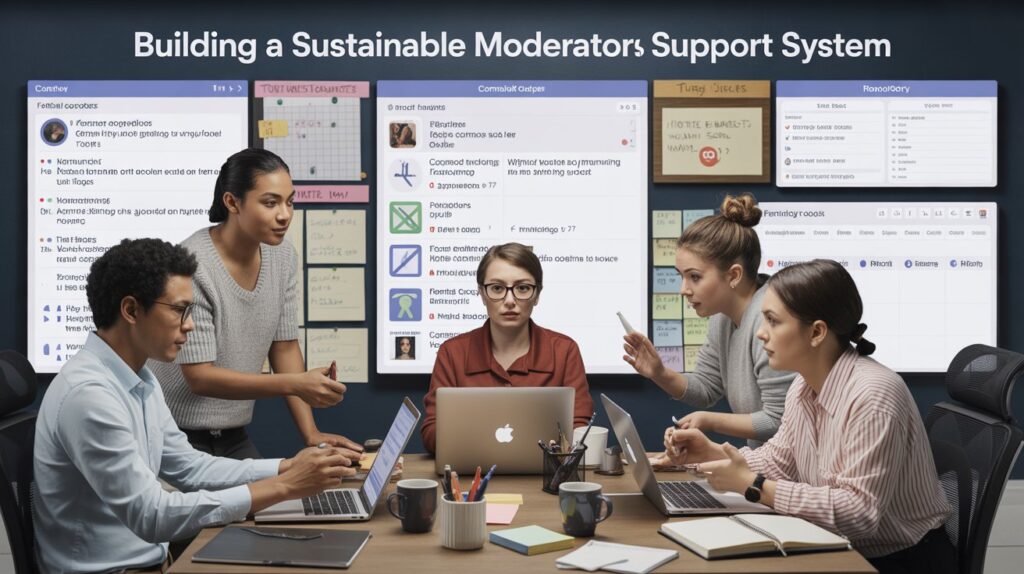
One of the most effective ways to support your team is by establishing dedicated peer support networks. These spaces allow moderators to share their daily experiences and vent in a safe, private environment. By connecting with others who face similar challenges, volunteers feel less isolated in their roles.
These networks serve as a vital outlet for processing difficult interactions. When moderators can talk through complex situations with peers, they gain new perspectives and emotional relief. This camaraderie is essential for maintaining a healthy and resilient team culture.
Setting Realistic Boundaries for Volunteer Moderators
Clear expectations are the cornerstone of any healthy volunteer program. Organizations must implement online safety protocols that define exactly what is expected of a moderator during their shift. By setting these boundaries early, you help volunteers manage their time and energy effectively.
It is also vital to integrate comprehensive community moderator training that emphasizes self-care alongside technical skills. When volunteers understand their limits, they are far more likely to stay engaged over the long term. Protecting your team is not just a kind gesture; it is a strategic necessity for any thriving digital community.
Proactive Conflict Resolution Techniques
Conflict is an inevitable part of any digital space, but your response defines the community’s future. When members feel heard and respected, they are more likely to follow online community guidelines even during intense disagreements. A calm, consistent approach prevents minor friction from turning into a full-blown crisis.
De-escalation Strategies for Heated Threads
When a thread starts to heat up, your primary goal is to lower the emotional temperature. Start by acknowledging the validity of the conversation while firmly reminding participants to remain civil. Publicly modeling the behavior you expect often encourages others to follow suit.
If the conversation remains aggressive, move the discussion to a private channel or issue a temporary “cooling-off” period. This prevents the public thread from becoming a toxic environment for other members. Always provide a clear reason for your intervention so the community understands that you are protecting the space, not censoring ideas.
Managing Trolls and Bad Actors Without Engaging
Trolls thrive on attention, so the most effective strategy is often to deny them the reaction they crave. By utilizing automated content moderation, you can flag suspicious accounts or keywords before they disrupt the flow of conversation. This allows you to handle bad actors quietly without turning them into a spectacle.
Focus on managing online toxicity by removing disruptive content quickly and silently. If a user continues to violate rules, use your established enforcement protocols to issue warnings or bans. Remember that your time is valuable, and you do not owe a disruptive user a debate or an explanation for your moderation decisions.
| Conflict Type | Moderator Action | Expected Outcome |
|---|---|---|
| Passionate Debate | Monitor closely | Healthy engagement |
| Personal Attacks | Immediate warning | Restored civility |
| Intentional Trolling | Silent removal | Zero attention gain |
| Spam/Bot Activity | Automated block | Clean feed |
Fostering a Positive Culture Through Community-Led Initiatives
Sustainable growth happens when your community members feel empowered to shape the environment they inhabit. By shifting the focus toward member-led initiatives, you create a space where users feel a genuine sense of belonging. Implementing effective community management strategies allows the community to take ownership of its own health and vibrancy.

Empowering Power Users as Community Ambassadors
Your most active members are often the best advocates for your brand values. By launching community ambassador programs, you provide these individuals with the tools to help maintain a welcoming environment. This approach helps offload some of the daily moderation burden while ensuring that the community culture remains authentic.
Ambassadors act as the first line of defense, guiding new members and modeling positive behavior. When users see their peers leading by example, they are more likely to follow suit. This peer-to-peer interaction is essential for maintaining a healthy, self-regulating ecosystem.
Rewarding Constructive Participation
Encouraging the right behaviors is just as important as filtering out the bad ones. Utilizing specific community engagement tips, such as public recognition or exclusive badges, can motivate members to contribute positively. When you celebrate helpfulness, you reinforce the standards that make your space thrive.
Consider implementing a system where high-quality contributions are highlighted in newsletters or pinned threads. This simple act of appreciation goes a long way in building loyalty. The following table outlines how different engagement tactics contribute to a healthier digital environment.
| Strategy | Primary Benefit | Impact Level |
|---|---|---|
| Ambassador Programs | Peer-led moderation | High |
| Public Recognition | Increased motivation | Medium |
| Conflict Resolution Online | Reduced toxicity | High |
| Exclusive Badges | User retention | Low |
Ultimately, these efforts lead to sustainable community growth that benefits everyone involved. By focusing on empowerment and positive reinforcement, you ensure that your community remains a vibrant, safe, and welcoming space for years to come.
Managing Your Time and Energy as a Moderator
Balancing your personal life while you moderate online community spaces is a challenge that requires a strategic approach. Many volunteers find that without a clear plan, the constant influx of notifications can lead to exhaustion. Proper community moderator training provides the foundation you need to handle these pressures effectively.
Prioritizing High-Impact Moderation Tasks
Not every notification requires an immediate response. To prevent moderator burnout, you must learn to distinguish between urgent crises and routine maintenance. Focus your energy on tasks that directly improve the health of the space.
Consider these community engagement tips to streamline your workflow:
- Identify recurring issues and create automated responses for them.
- Focus on high-traffic threads where conflict is most likely to occur.
- Delegate routine administrative tasks to trusted power users.
- Use moderation queues to batch your review process rather than checking in every few minutes.
Scheduling Digital Detox Periods
Maintaining digital wellness for moderators is not a luxury; it is a necessity for long-term success. Constant exposure to online content can drain your mental reserves quickly. You should treat your offline time with the same respect you give your moderation duties.
Set firm boundaries by scheduling specific times to step away from all screens. During these periods, disconnect completely from your moderation tools to allow your mind to recover. Consistency is key to ensuring you return to your community refreshed and ready to lead with a clear perspective.
Adapting to New Platform Features and Privacy Regulations
Your community strategy must evolve as quickly as the technology that powers it. The digital landscape is a moving target, and maintaining digital community safety requires a proactive mindset. By staying informed, you can turn potential disruptions into opportunities for growth.

Navigating Changes in Social Media Algorithms
Platform updates often change how content reaches your members, which directly impacts your social media moderation efforts. When algorithms shift, engagement patterns change, often leading to new types of behavior in comment sections.
To stay ahead, consider these strategies for adapting to algorithmic flux:
- Monitor platform developer blogs for upcoming feature releases.
- Adjust your moderation focus based on new engagement metrics.
- Test different posting times to see how visibility changes.
Ensuring Compliance with Evolving Data Privacy Laws
Legal requirements regarding user data are becoming stricter across the globe. Protecting your members means more than just filtering bad language; it involves safeguarding their personal information from unauthorized access.
Utilizing the right community moderation tools is essential for maintaining this balance. Modern AI moderation tools can help you automate compliance checks, ensuring that sensitive data is handled according to current regulations. These systems provide a safety net that allows you to focus on building meaningful connections while keeping your community legally compliant.
Ultimately, managing online toxicity is a multifaceted responsibility. By combining smart technology with a flexible approach, you can create a space that is both welcoming and secure for every member.
Conclusion
Mastering the art of online interaction requires a balance of human empathy and smart technology. You now possess the tools to manage your digital environment with confidence and ease.
True success in effective community moderation relies on your ability to adapt to new challenges. By prioritizing clear boundaries, you protect your team from burnout while keeping your space welcoming for every member.
Integrating community building best practices helps you stay ahead of shifting trends. These methods ensure your platform remains a vibrant hub for meaningful connection rather than a source of stress.
You can scale your efforts by launching community ambassador programs to share the workload. Empowering your most dedicated users creates a sense of ownership that strengthens the entire group.
Focusing on these core strategies paves the way for sustainable community growth. Your commitment to a healthy, well-supported environment will define the long-term impact of your work. Start applying these insights today to see your digital space flourish.
FAQ
How can I prevent moderator burnout while managing a high-growth community?
Preventing exhaustion starts with prioritizing digital wellness for moderators. In 2026, successful teams on platforms like Discord and Reddit maintain sustainability by scheduling mandatory digital detox periods and establishing peer support networks. By setting realistic boundaries for volunteer moderators and ensuring they have access to comprehensive community moderator training, you can protect your team’s mental health while fostering a vibrant environment.
What is the most effective way to enforce community guidelines without appearing heavy-handed?
The key lies in implementing tiered enforcement strategies. Instead of a “one-size-fits-all” approach, these online safety protocols allow you to address minor infractions with warnings or temporary mutes while reserving permanent bans for severe policy violations. Clear, unambiguous rules are the bedrock of digital community safety, ensuring every user understands the consequences of their actions within the space.
How do AI moderation tools improve the efficiency of human moderation teams?
Modern AI moderation tools, such as those developed by Hive Moderation or Perspective API, handle the heavy lifting of routine content filtering. By utilizing sentiment analysis to identify escalating conflicts and online toxicity in real-time, these tools allow human moderators to focus their energy on high-impact tasks. This balance of automation and human oversight is essential for effective social media moderation in a high-volume digital landscape.
What are the best de-escalation strategies for handling heated threads and trolls?
Proactive conflict resolution online involves using automated content moderation to flag potential issues before they spiral. When a thread becomes heated, moderators should employ de-escalation strategies that refocus the conversation on the guidelines. For bad actors and trolls, the most effective technique is often a “silent” moderation approach—removing the content without providing the public engagement they crave.
How can I use community-led initiatives to foster a more positive culture?
Empowering your power users through community ambassador programs is a fantastic way to build a self-sustaining culture. By rewarding constructive participation and following proven community engagement tips, you encourage members to take ownership of their environment. This collaborative approach leads to sustainable community growth and reduces the overall burden on your primary moderation staff.
How do shifting social media algorithms and privacy laws affect digital community management?
Staying compliant with evolving data privacy laws, such as GDPR or CCPA, is a major responsibility for modern moderators. Furthermore, navigating changes in social media algorithms requires a flexible strategy and the right community moderation tools. By staying informed about platform updates from companies like Meta or LinkedIn, you can adapt your digital community management tactics to keep your space safe and legally sound.